
Fructose Indigo Vat (the Michel Garcia 1-2-3 indigo vat)
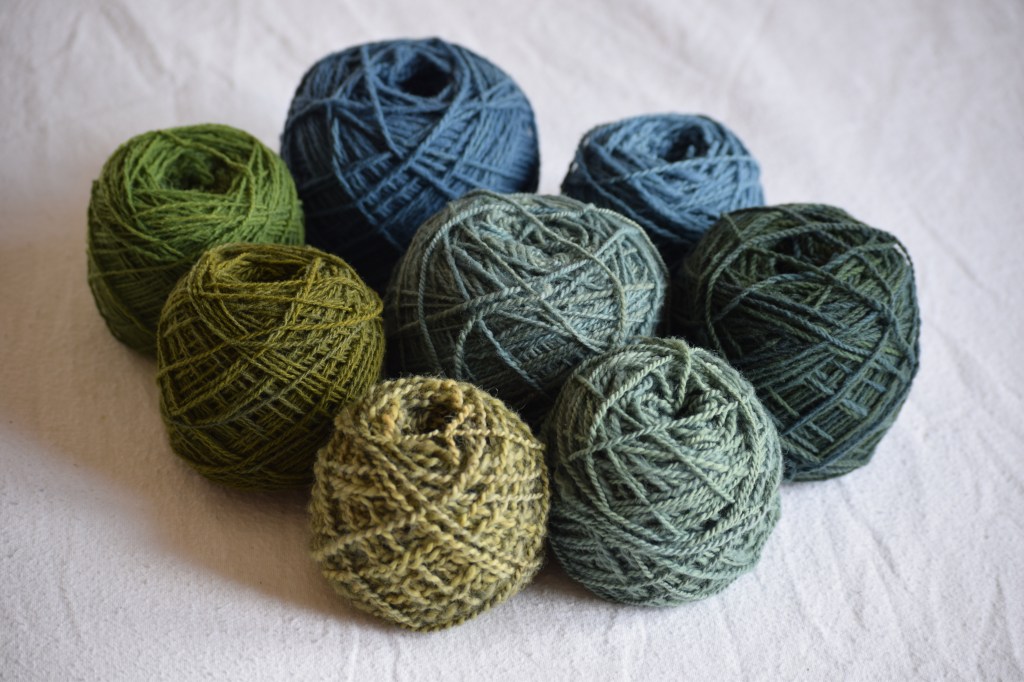
I read that this vat is better for cotton than wool, some people even indicated that they could only obtain light blues in wool & that the wool fibre was affected. However, I have tried it & not only have obtained beautiful shades of blue, but I didn’t detect any damage to my wool.
However, if you are concern, I recommend using the henna vat (described below).

You will need:
- 1 part of indigo pigment (30 gr for a 10 L. vat)
- 2 parts of Calcium hydroxide (slaked lime); chemical formula: Ca(OH)2 (60 gr for a 10 L. vat)
- 3 parts of fructose (90 gr for a 10 L. vat)
Procedure:
- In a large saucepan, warm 10L. of water to 70-80 ºC.
- While the water is warming, mix together in a glass mason jar of about 2L the indigo pigment, the slaked lime & the fructose. Close the jar firmly & shake strongly for a couple of minutes.
- Take 2 L. of warm water & add it to the mason jar. Close the jar & shake to mix everything well.
- Pour gradually the mix of the mason jar onto the warm 8 L. Make sure to pour gradually & close to the rim of the saucepan to avoid adding oxygen to the vat (if some mix is still inside the mason jar add some warm water, mix carefully with a wooden spoon & add to the saucepan). Keep the mix at about 75ºC.
- Using a wooden stick or spoon, mix the vat for about one minute, making sure not to shake it to avoid adding oxygen. I use a strong centrifuge movement in the centre of the vat, creating a whirlpool. Let it rest for one minute & repeat this step 3 or 4 times more.
- Check for the signs of a good indigo vat:
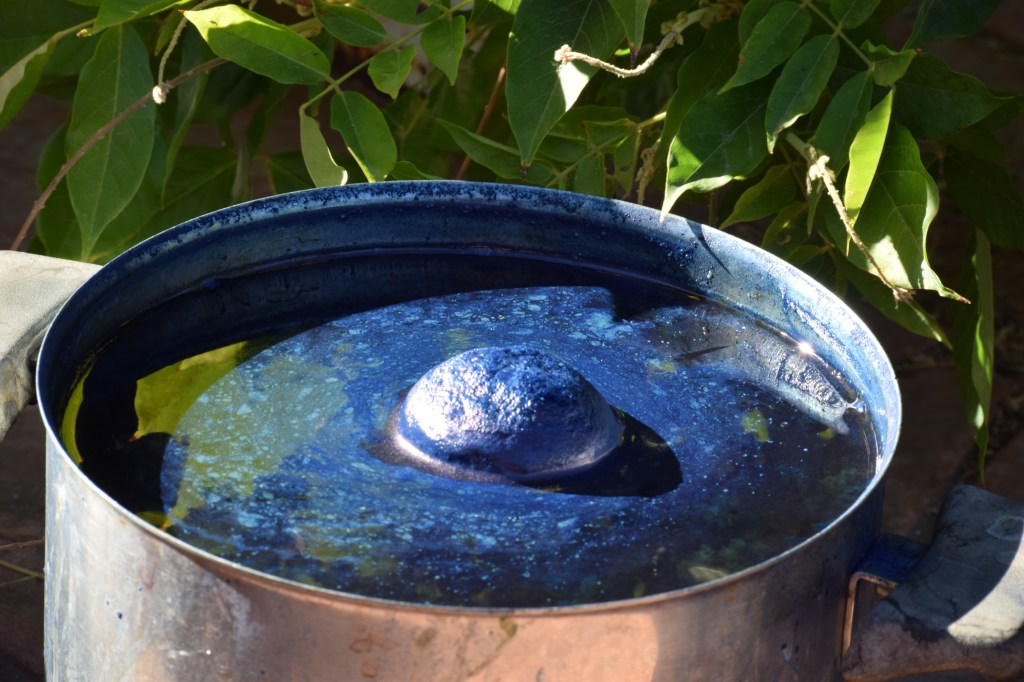
- The formation of a “indigo flower” in the centre
- A shiny, metallic surface
- A vat of clear greenish colour
- Let it rest overnight
To dye your fibre, wet it previously & rinse it to ensure an even take of the dye. Introduce the fibre vertically & slowly in the dye bath, making sure not to introduce oxygen. Leave it in the vat for about 3 minutes & take them out of the vat, again making sure not to introduce oxygen in the vat. In contact with the air, the fibres should change from a greenish to a blue colour. Leave the fibres to dry for about 10 minutes & rinse them in clear water. To obtain darker shades, you can submerge the fibres in the vat several times, letting the inside 3 minutes at a time.
Henna Indigo Vat
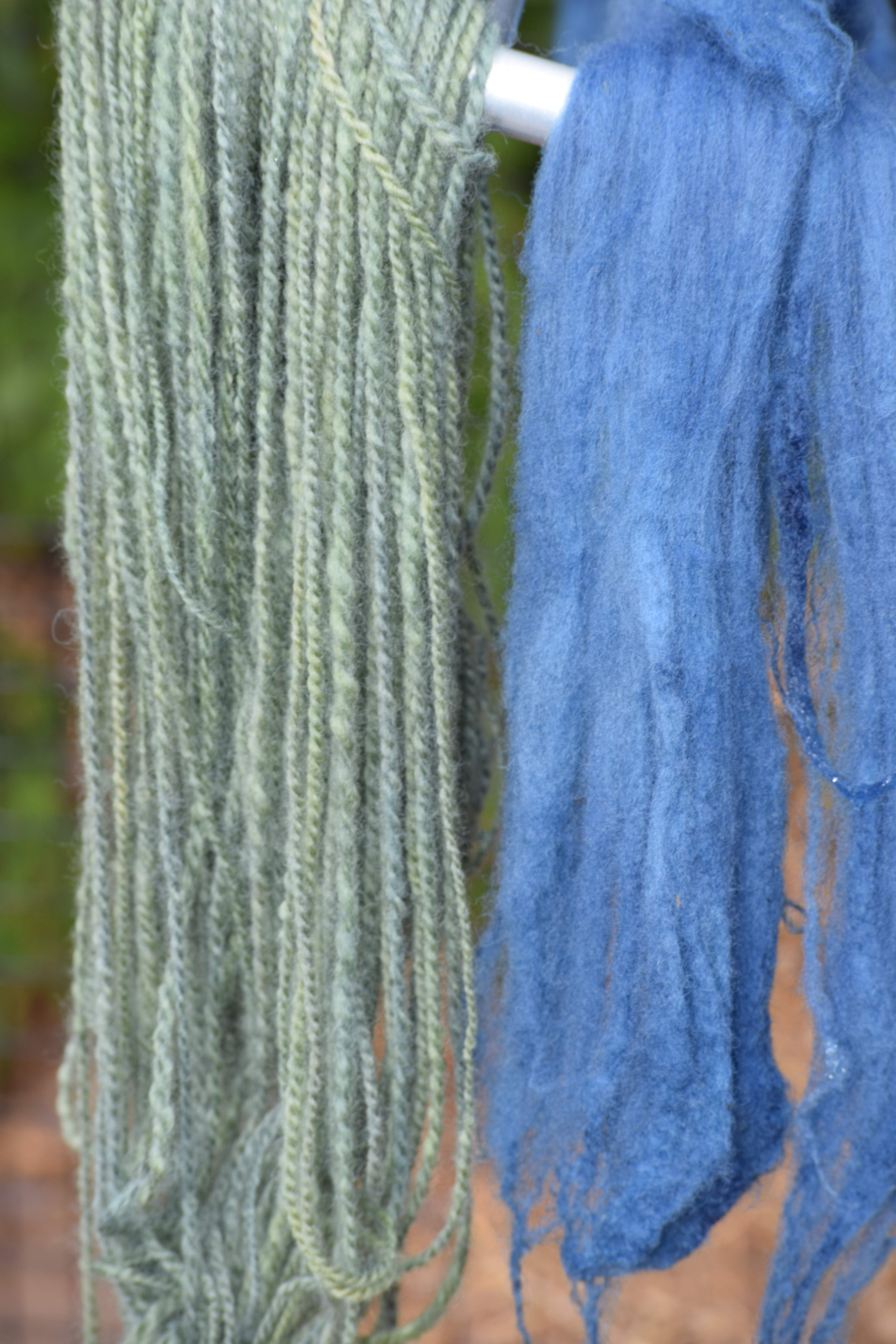
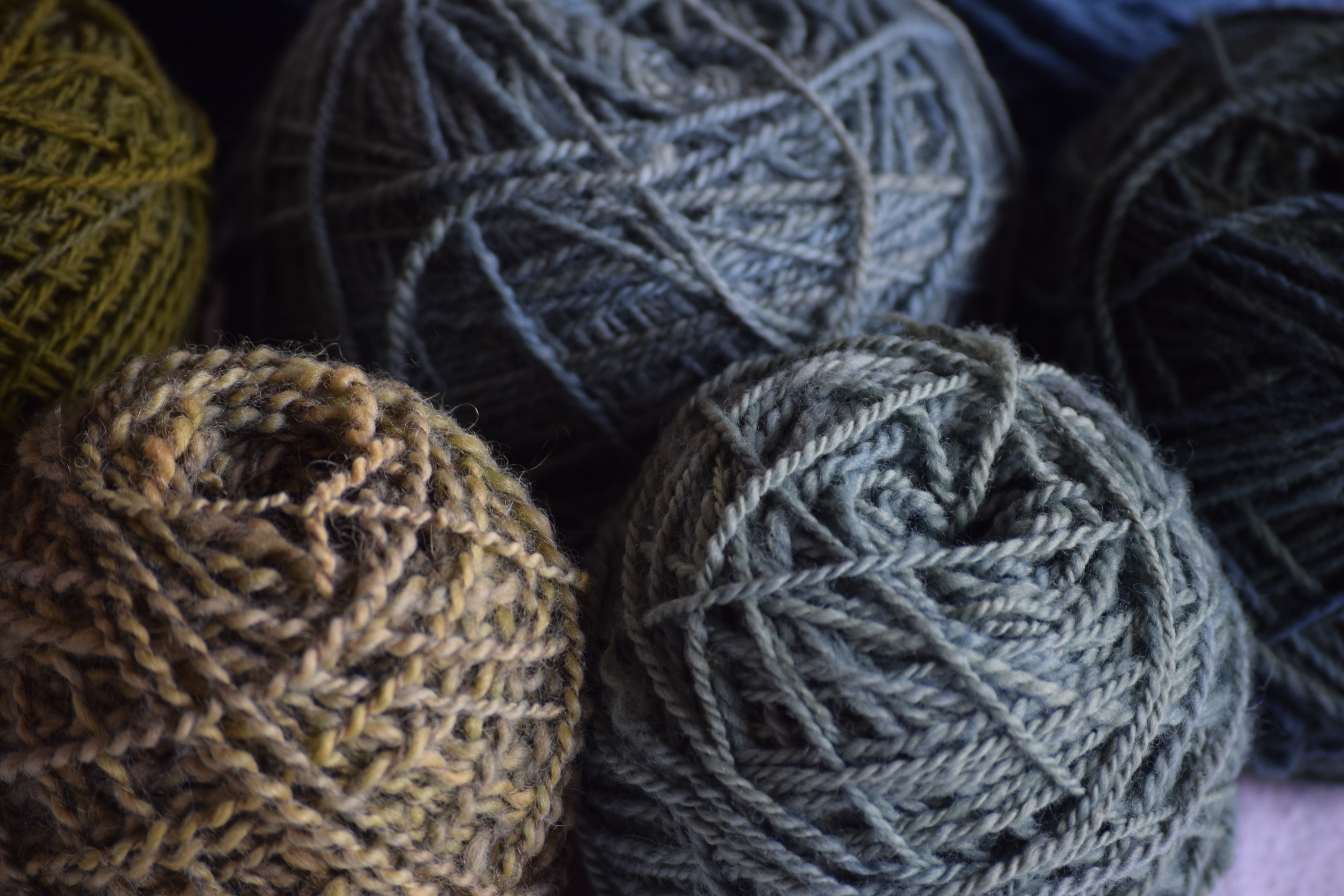
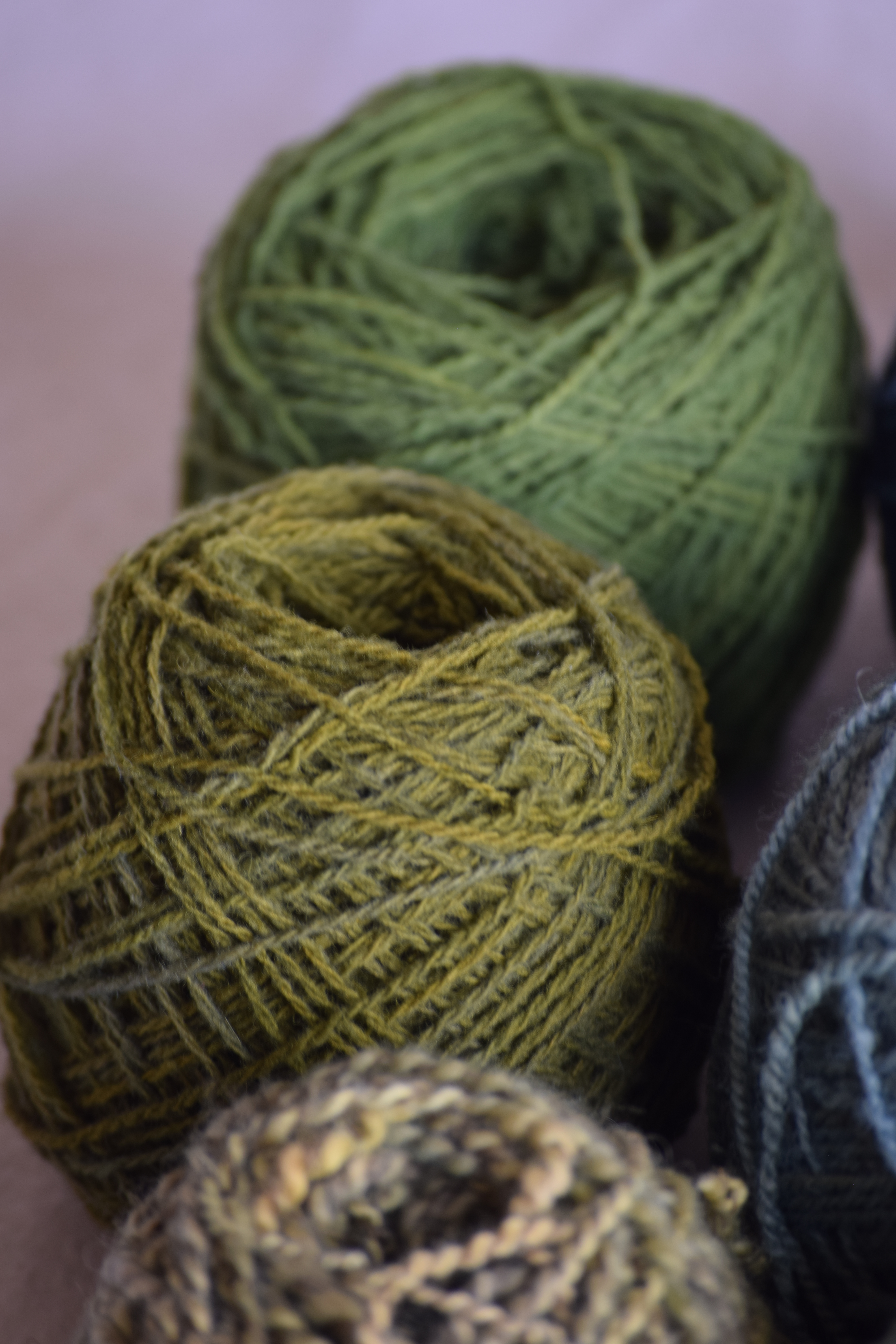
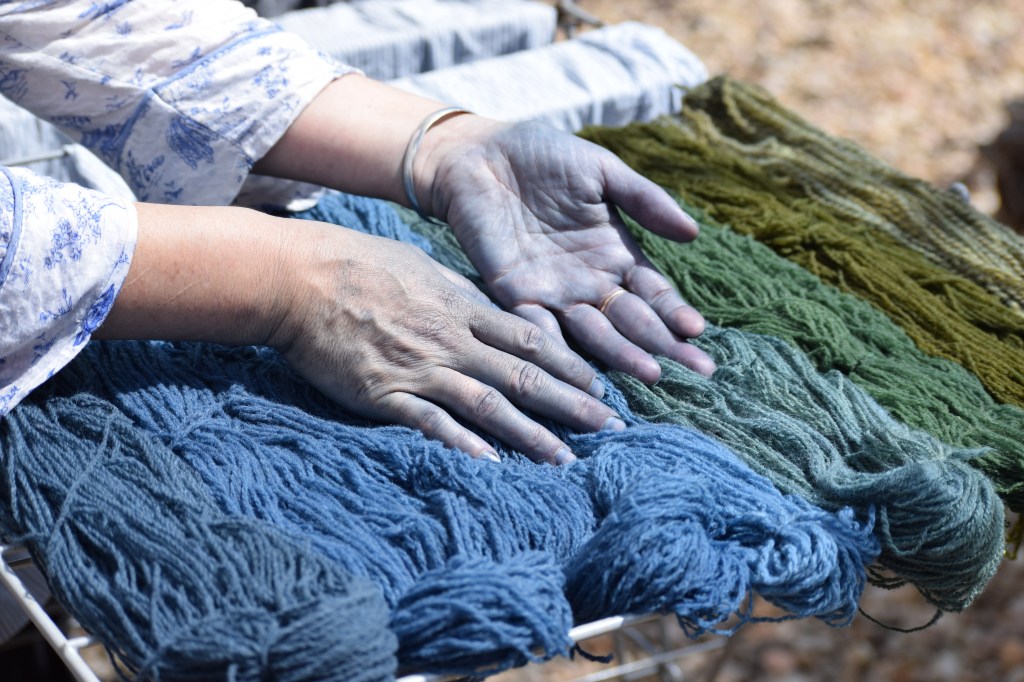
Henna (Lawsonia inermis) is often used to create organic indigo vats, as it serves the same function as fructose, it acts as a reducing agent, helping to create an alkaline solution by “taking away the oxygen”. With henna indigo vats, it’s possible to obtain very rich and deep blue shades that are very colourfast.
You will need:
- 1 part of indigo pigment (40 gr for a 10 L. vat)
- 2 parts of Calcium hydroxide (slaked lime); chemical formula: Ca(OH)2 (80 gr for a 10 L. vat)
- 3 parts of henna (120 gr for a 10 L. vat)
Procedure:
- In a large saucepan, warm 8L. of water to 70-80 ºC.
- In a smaller saucepan, boil 2L. of water & add the henna, until it sinks to the bottom of the saucepan.
- Meanwhile, mix together in a glass mason jar of about 2L the indigo pigment & the slaked lime. Close the jar firmly & shake strongly for a couple of minutes.
- Filter the henna mix & pour the liquid gradually onto the mason jar with the mix of indigo pigment & the slaked lime. Mix everything together with a wooden spun, careful not to introduce oxygen in the mix.
- Pour the mix of the mason jar onto the warm 8 L. Make sure to pour gradually & close to the rim of the saucepan to avoid adding oxygen to the vat (if some mix is still inside the mason jar add some warm water, mix carefully with a wooden poon & add to the saucepan). Keep the mix at about 75ºC.
- Using a wooden stick or spun, mix the vat for about one minute, making sure not to shake it to avoid adding oxygen. I use a strong centrifuge movement in the centre of the vat, creating a whirlpool Let it rest for one minute & repeat this step 3 or 4 times more.
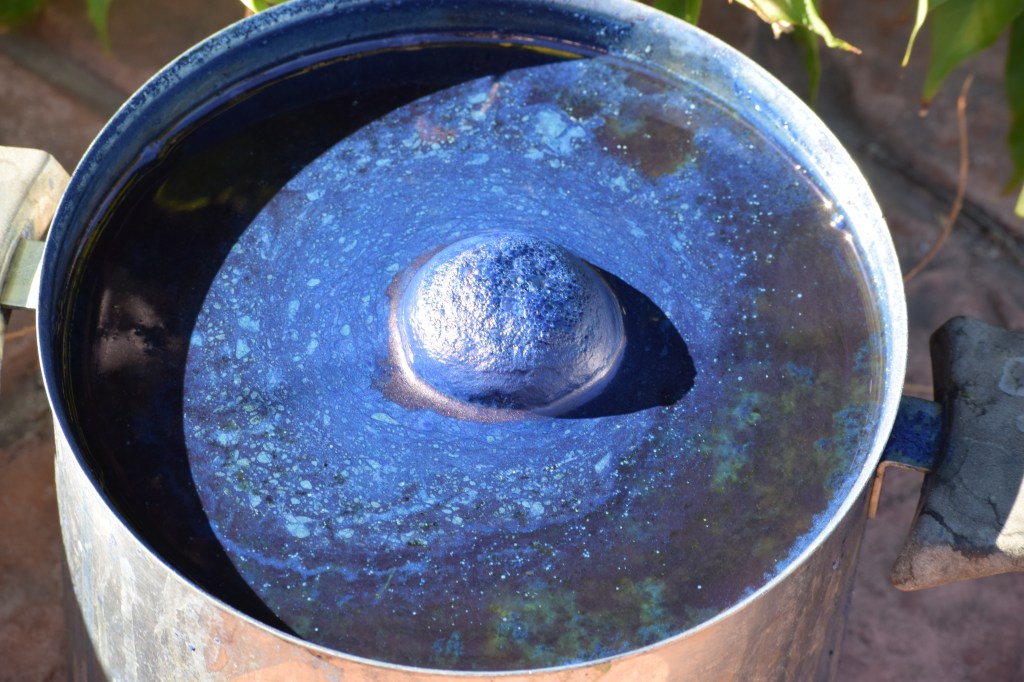
- Check for the signs of a good indigo vat
- The formation of a “indigo flower” in the centre
- A shiny, metallic surface
- A vat of clear greenish colour
- Let it rest overnight
The process of dyeing is the same as the one describes in the fructose vat.
 TeresaLaLana