
For a long time, I wanted to explore the world of natural dyes, initially I just tried any plant material that fell on my hands and was always delighted by the beautiful results that I obtained. The surprise element was a big part of the excitement!
However, little by little I started to approach my experiments in a more organized and scientific way, and I decided to go one colour at a time… The first colours that I explored were yellows and browns, I dyed with onion and pomegranate skins, walnut husks, alder and eucalyptus leaves, and several types of flowers, including marigolds, goldenrod and rosemary.
When I began my journey to dye reds, I became very interested in the history of cochineal dyes. I read all I could find out about its origins in South America, the economic impact that its trade had since the 16th century and how it contributed to shape the Empires of the Old World.
So, I decided to learn all I could about dyeing with cochineal and record the results of my experiments.
Exploring cochineal dyes
I wanted to obtain the greatest variety of colours I could from my cochineal, but at the same time I was looking to create a record of information that would allow me to reproduce the colours I obtained.
It is well known that when dyeing with natural dyes it is difficult to reproduce exact result, so I decided that for my experiments I would try to control as many factors I could, especially as I use water collected from the last months of rain (Spain is quite a dry country, so water is a valuable resource).
All the cochineal I used came from the same source1, and all the yarn I used was previously mordanted with alum (12% WoF2).
For the bases I decided to use two different yarns: 100% merino and mix of 65% guirra and 35% merino. The Guirra sheep is a local Spanish breed from the area of the Levant, and it is characterized by its reddish fleece. The 100% merino yarn was a bright white, while the guirra + merino yarn was white with a reddish undertone.
I also decided to use a variety of different modifiers: ferrous sulfate (3 gr), vinegar (50 ml), lemon juice (50 ml), cream of tartar (5%) and ash soda (around 5% WoF).
Finally, I tried to control the temperature, never raising it above 80-90 ºC. For the dye process I simmer the yarns for about an hour and let them cool down on the dyebath overnight.
A dyeing day!
So, one beautiful morning of May, before it became too hot that it is not possible to set foot on the garden (it does happen in Spain!), I gathered all my materials and began my journey exploring cochineal dyes!
- Cochineal (20% WoF):
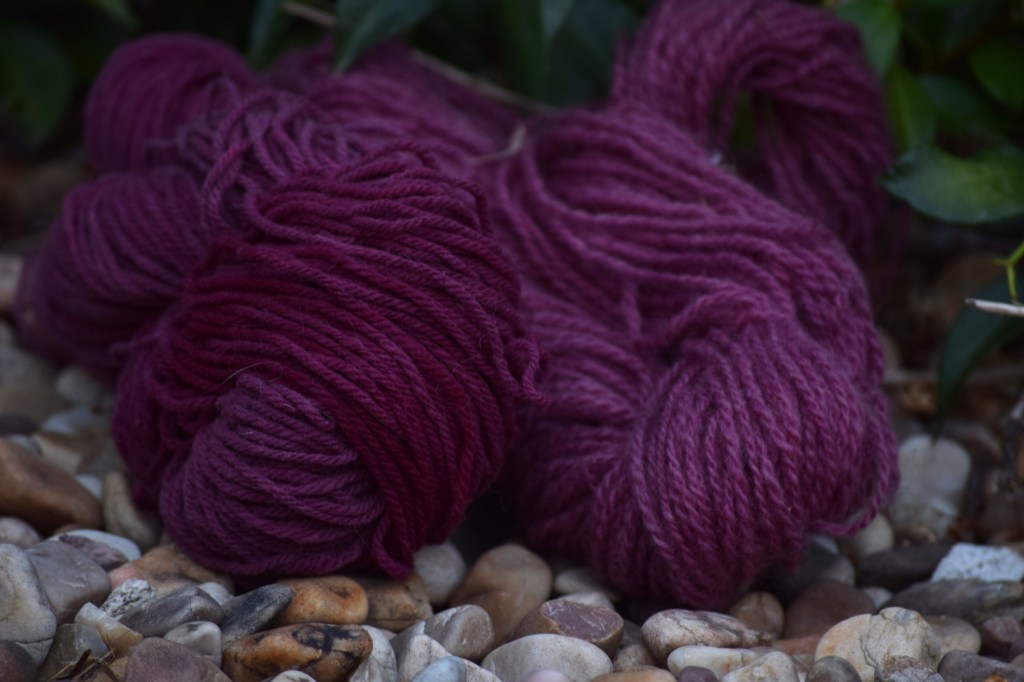
I started by dyeing two skeins (one 100% merino and one 65% guirra) without adding any modifiers, as I wanted to see which colours I could obtain directly from the cochineal. That was my first surprise… When I lifted the skeins from the dye-pot I could see two beautiful purple-fuchsia skeins. Both skeins had a very similar colour, but the 100% merino was a lighter and brighter shade.
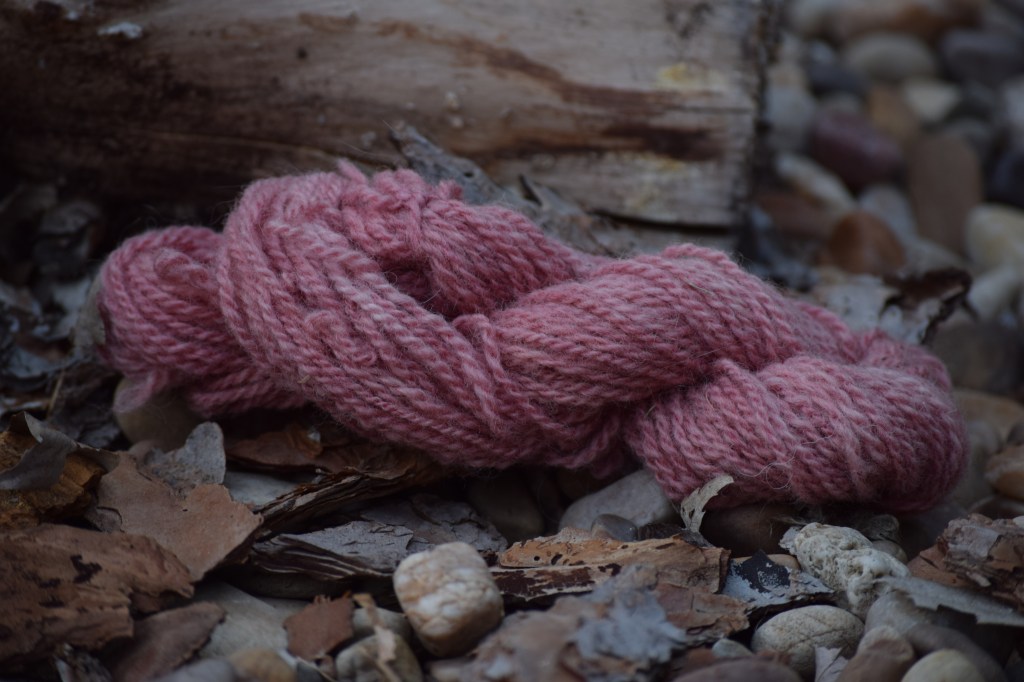
As I still had quite a lot of colour on my dyebath, I decided to add a smaller skein of 100% merino. With this second bath I obtained a pretty dust pink, a lighter version of the purple-fuchsia obtained on the first bath.
- Cochineal (20% WoF) + vinegar (50 ml) + CoT3 (5%):
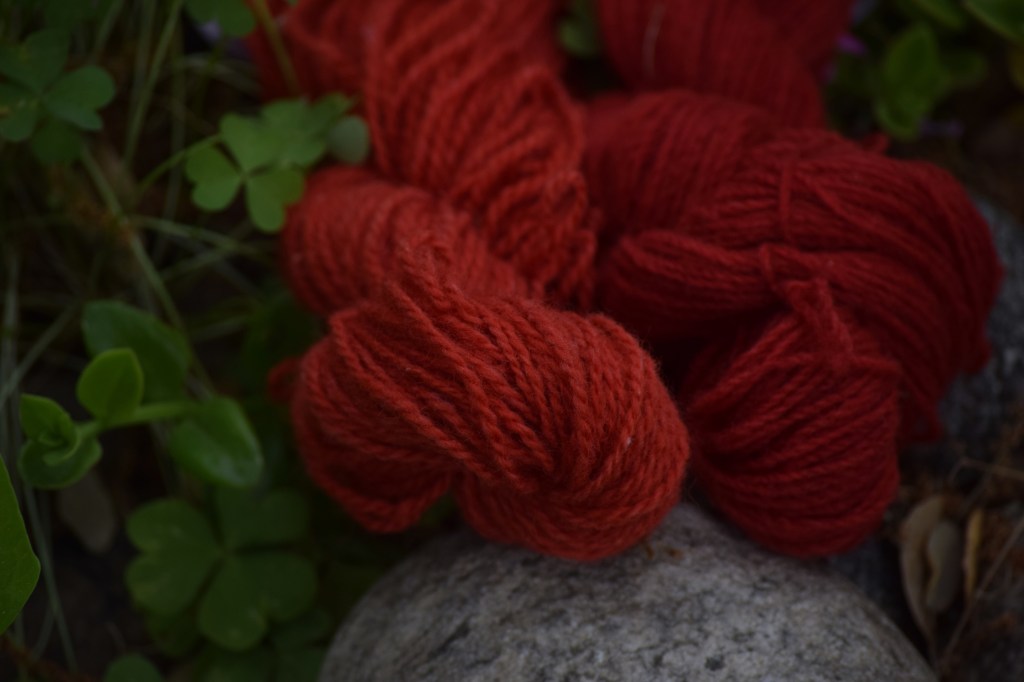
As I wanted to obtain a carmine-red, and I knew that an acid pH would turn my purple colours to bright reds, I, then, added to the dyebath both vinegar and CoT, the pH of this dyebath was around 2-3. The results were not disappointing! Two beautiful carmine-red skeins emerged! As before, the 100% merino yarn was a lighter and brighter shade.
- Cochineal (20% WoF) + ash soda (about 5%, until the dyebath reached a pH of 9):
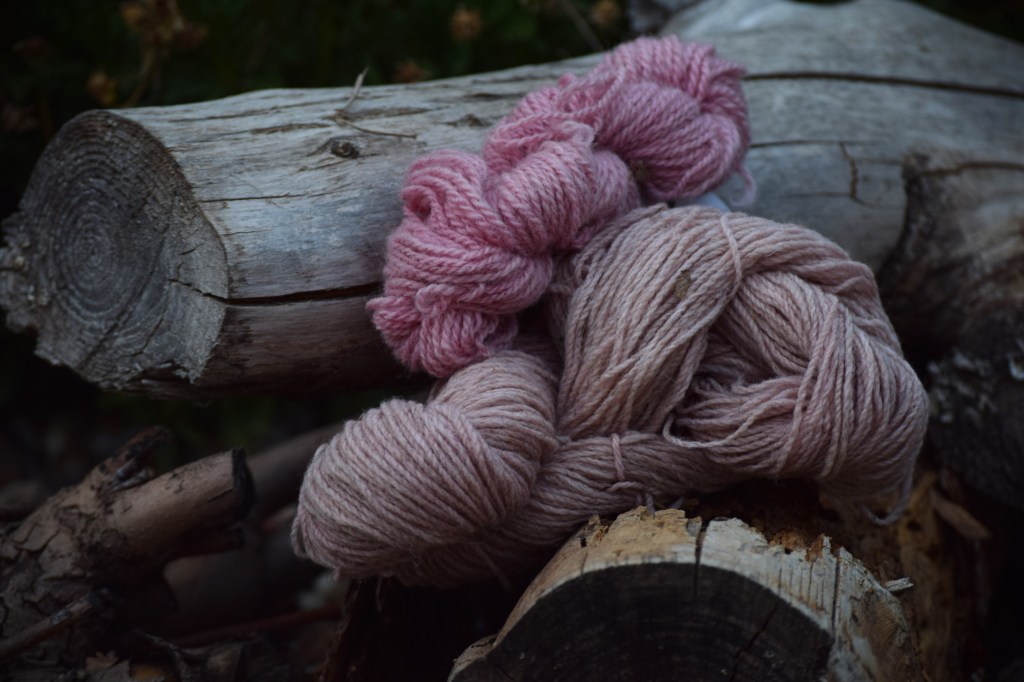
For the third experiment, I went to the other extreme of the pH scale, creating a basic dyebath by adding ash soda. As before, I dyed two skeins of yarn (one 100% merino and one 65% guirra), and this time I could see quite a different result! While the 100% merino gave me a bright pink, the 65% guirra resulted in a light dust pink, a bit like salmon!
Adding ferrous sulphate:
The next step in my dyeing experiments involved the addition of a new modifier that I knew would give me darker and duller shades of the colours I had previously obtained. How could I imagine that my dyepot still had some surprises for me!
- Cochineal (20% WoF) + ferrous sulphate (3 gr):
For my starting bath I didn’t add any modifiers (except the ferrous sulphate, of course!) as, like in the previous experiment, I wanted to know which will the “starting colour” be! The pH of the dyebath was approximately 7.
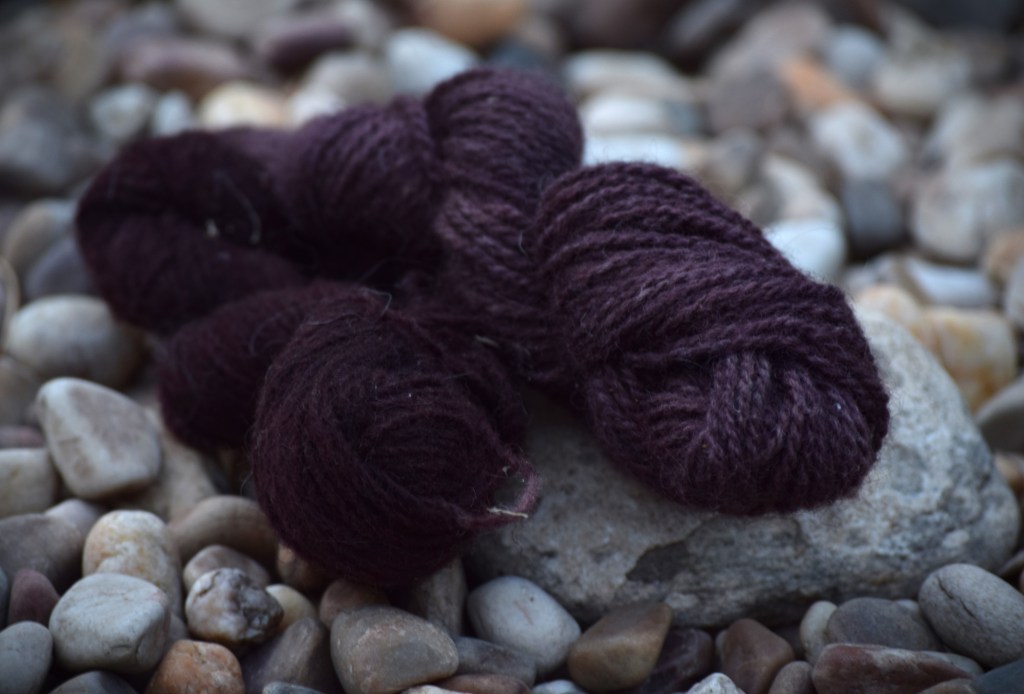
Like in previous experiments I dyed two skeins (one 100% merino and one 65% guirra) and …. What a beautiful result! A dark, dark aubergine! Again the 100% merino was a lighter and brighter shade.
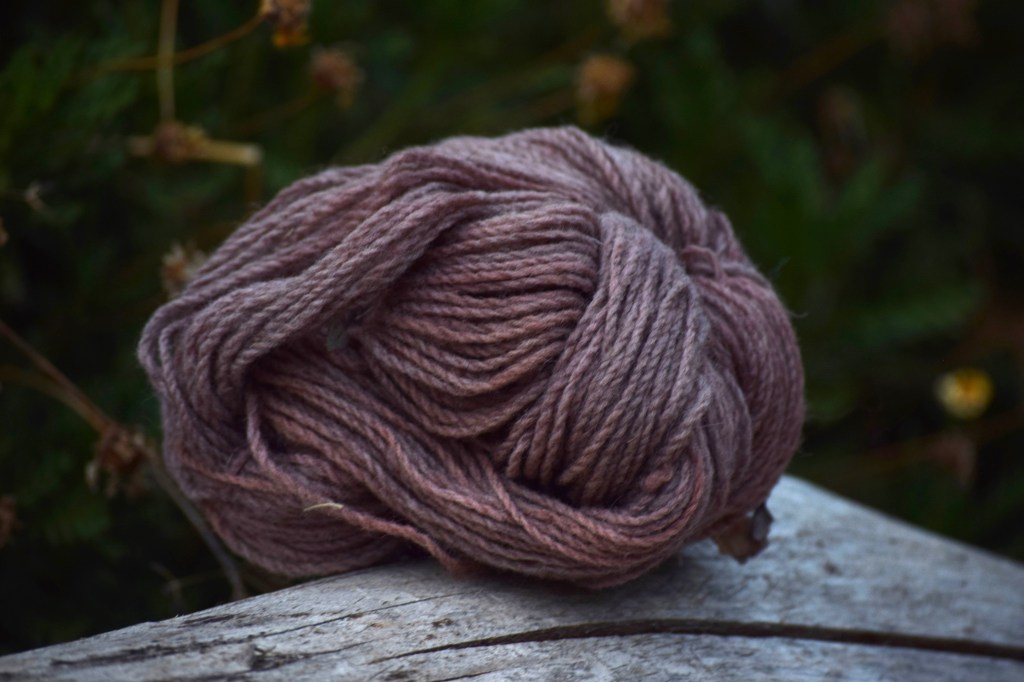
As I had some colour left in my dye bath I decided to add a small skein of 100% merino that came out as a light dust lilac!
When I was creating the acid baths in the previous experiment, I realized that I could lower the pH using different modifiers and I wondered if this could affect the colours I could obtain. So, for this part of the experiment, I decided to use two different acids modifiers.
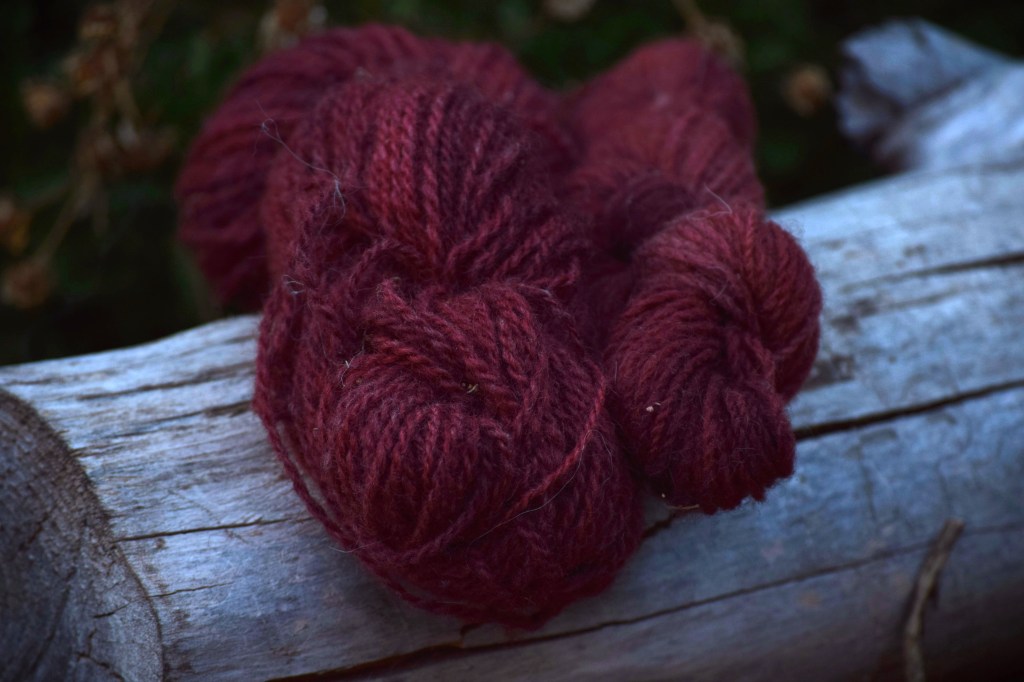
For the first acid bath I tried vinegar and cream of tartar, which lowered the pH of the bath to around 2. The two skeins that I submerged in the dyebath (one 100% merino and one 65% guirra) came out with quite an unexpected shade, a dark brick red colour that I thought was very nice!
- Cochineal (20% WoF) + ferrous sulphate (3 gr) + lemon juice (50 ml):
For the second acid bath I used 50 ml of lemon juice (pH of around 3). I was looking forward to seeing what colour I would obtain! I added a small skein of 100% merino that came out as a dark dust lilac!
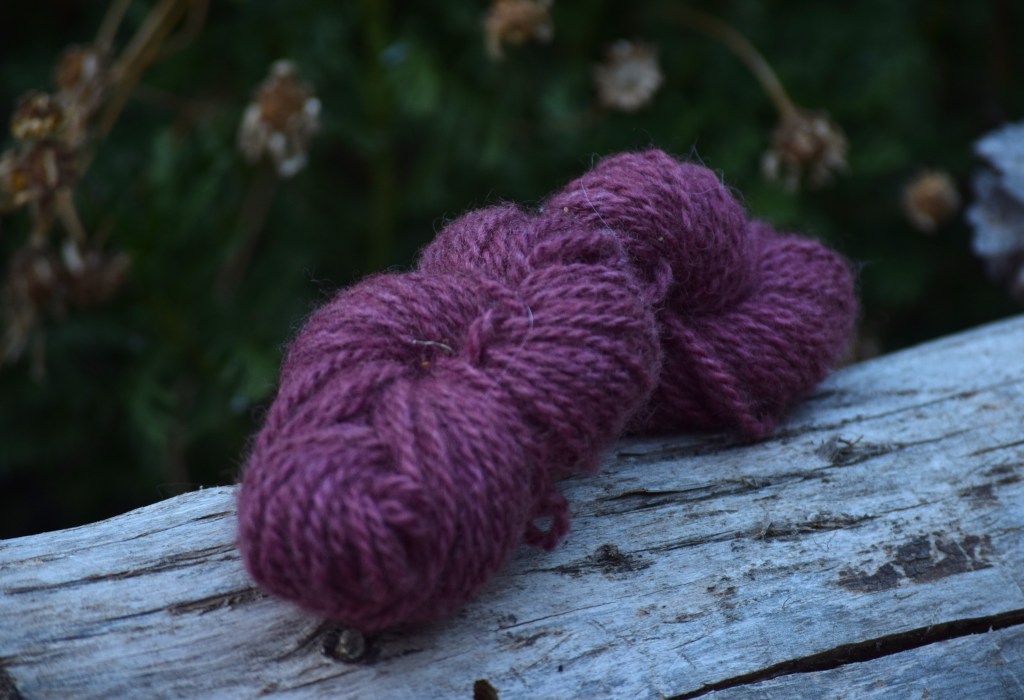
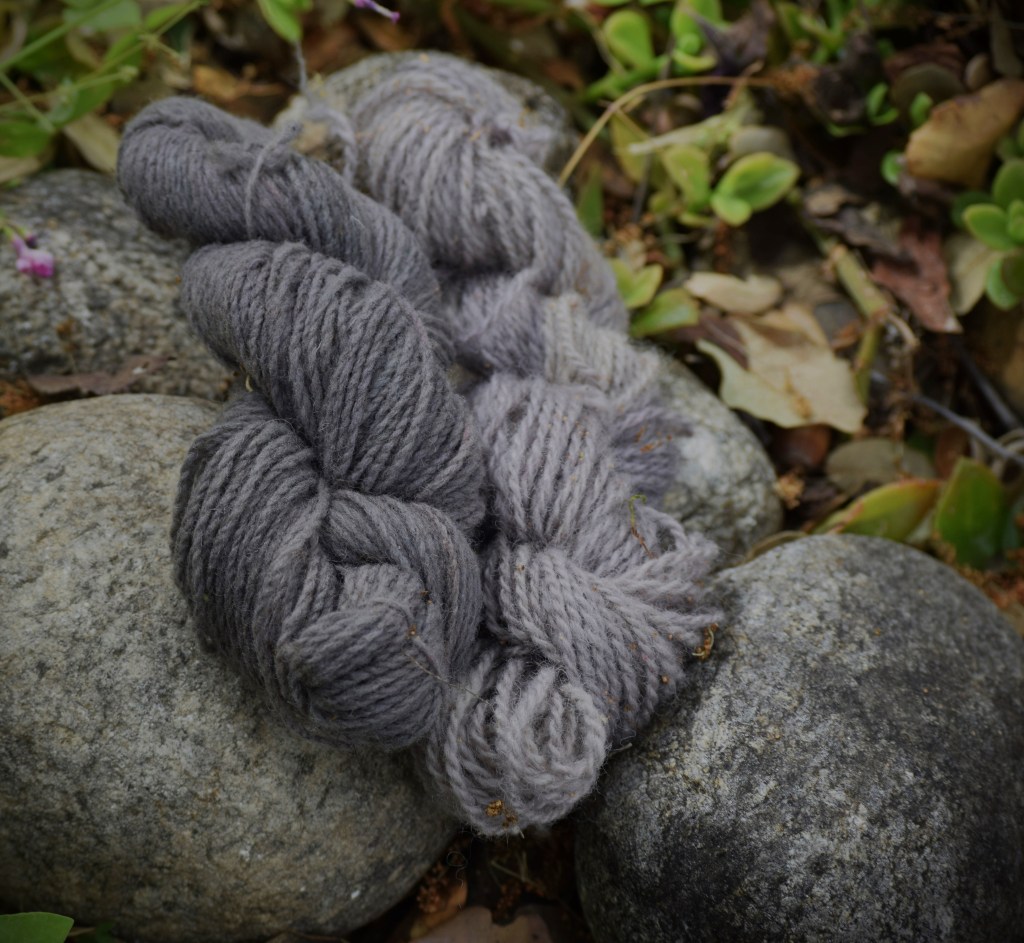
- Cochineal (20% WoF) + ferrous sulphate (3 gr) + ash soda (about 5%, until the dyebath reached a pH of 9):
The final part of the experiment was the basic bath of ferrous sulphate, and did it disappoint me? Quite the opposite! I introduced both skeins (my usual 100% merino and 65% guirra), I waited to see the results until the dyebath cooled down overnight, took out the skeins and…. There they were! Two grey skeins with lilac undertones! Not surprisingly the 100% merino was a lighter and brighter shade, but both so beautiful!
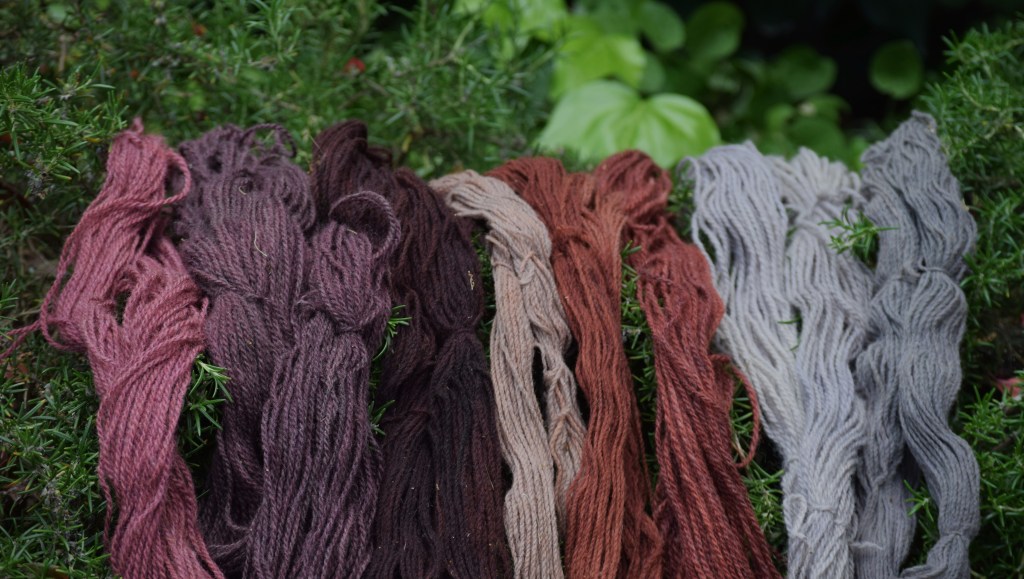
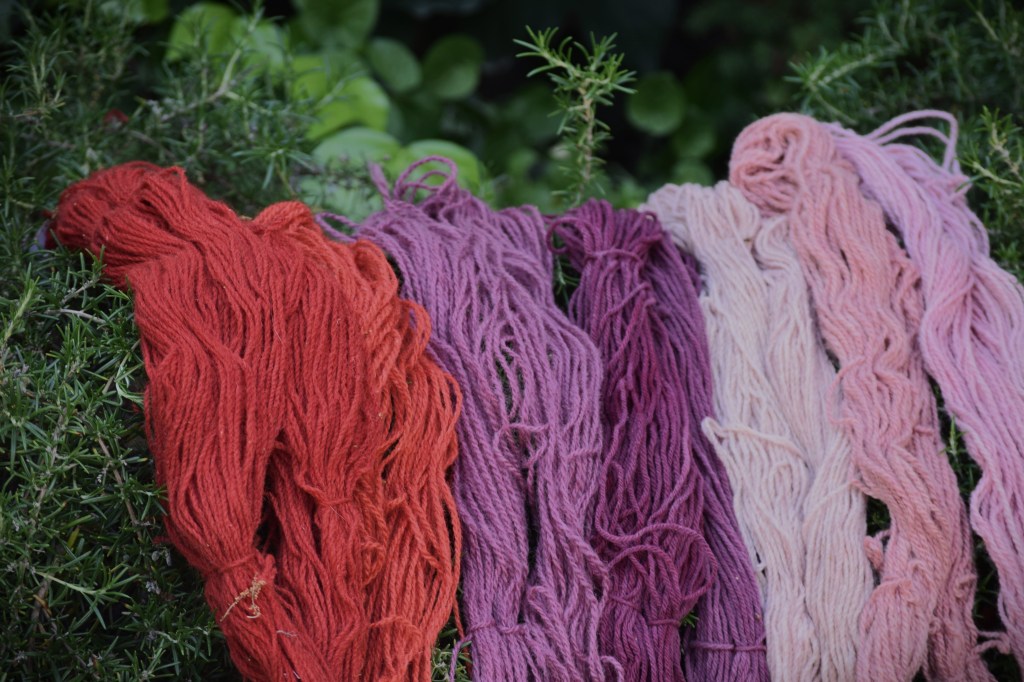
In total I dyed 15 skeins, and I achieved a much wider range of colours that I could have imagined when I started this amazing Journey! The beautiful results that I obtained have encouraged me to continue exploring the world of natural dyes. Hopefully I can share the results of new explorations in the future!
Notes
1Canaturex.
2 WoF: weight of fibre.
3CoT: cream of tartar.
 TeresaLaLana