
In medieval and classical Europe, dyer´s guilds guarded their secret dye recipes very closely, using roots, leaves, barks, insects and even snails they were able to create beautiful yellows, greens, and blues. However, achieving truly vibrant reds of good durability remained elusive, therefore red became a symbol of wealth and status.
The Spanish conquistadors arriving to Mexico and Peru were struck by the stunning scarlet reds used to dye the beautiful textiles that could be seen in the streets and markets of Tenochtitlan, modern-day Mexico City.
In 1520, Hernán Cortés described the incredibly saturated red pigment that was used to dye the mundane and the sacred, cloths, baskets, and even houses were dyed with brilliant reds.

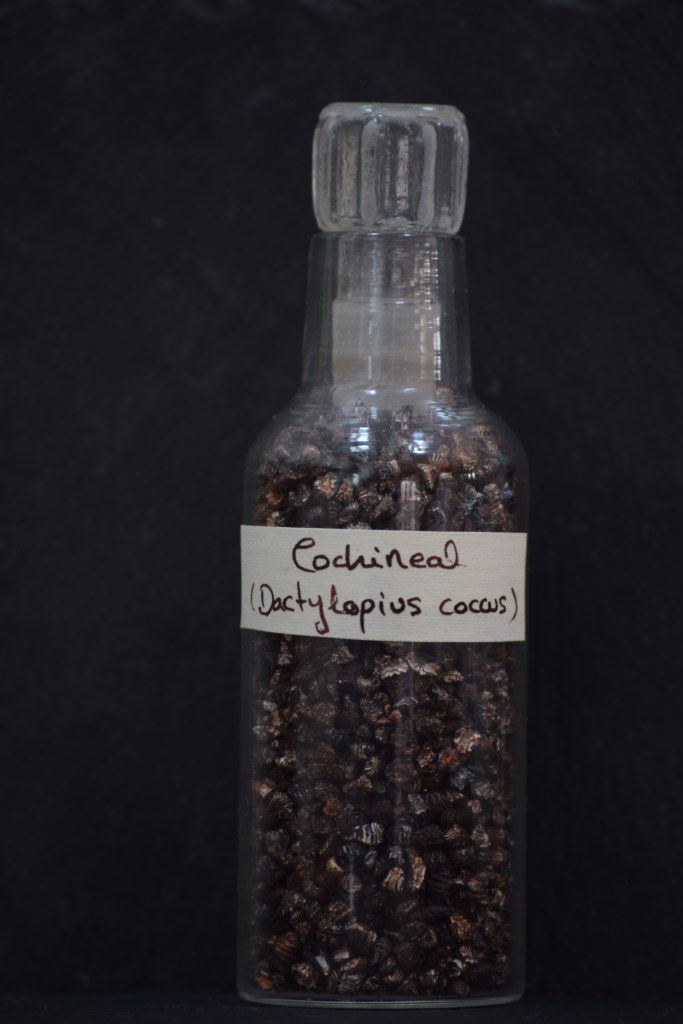
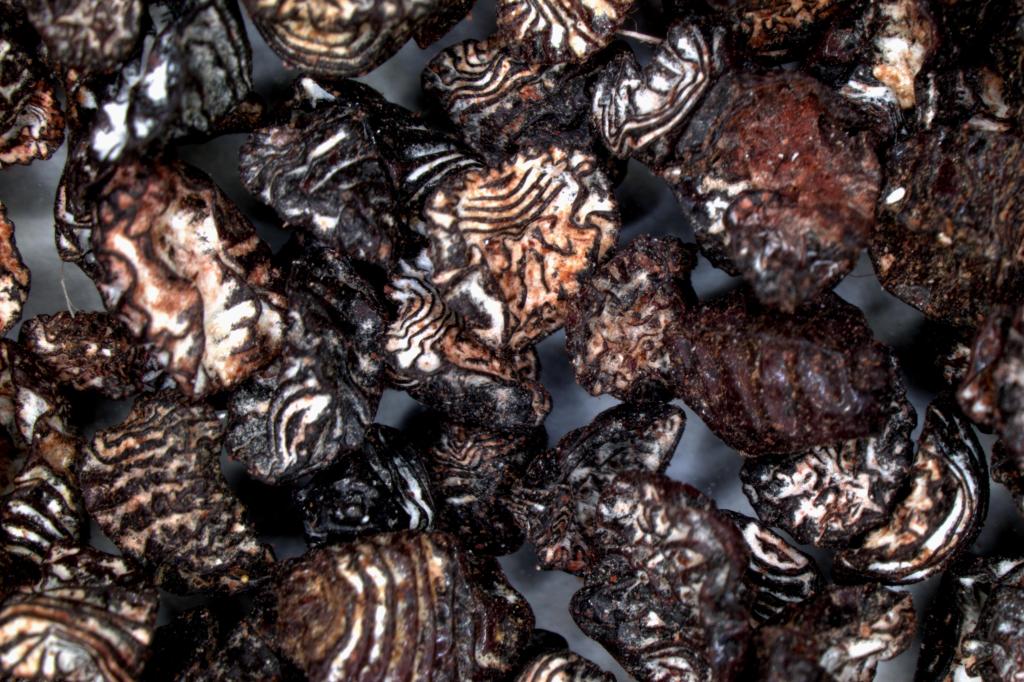
The dye was obtained by pulverizing the body of the cochineal insect, Dactylopius coccus, which produces carmic acid as a defence mechanism against predators. Cochineal insects feed on the nopal cacti. In Nahuatl (an Uto-Aztec language that was used by the Aztec and Toltec civilizations of Mexico and is still used to this day) the dye is called nocheztli, meaning “blood of the prickly-pear cactus”.
Cochineal dye was soon a very valuable product, dyeing the robes of kings and nobility and the togas of cardinals in Rome… Artists usually combined pulverized cochineal with a binder to create a vibrant pigment known as cochineal lake. The canvases of the most known painters of Europe (Tiziano, Tintoretto, Rembrandt, Van Dyck,..) came to life with the use of cochineal to reveal the opulence of their sitters.
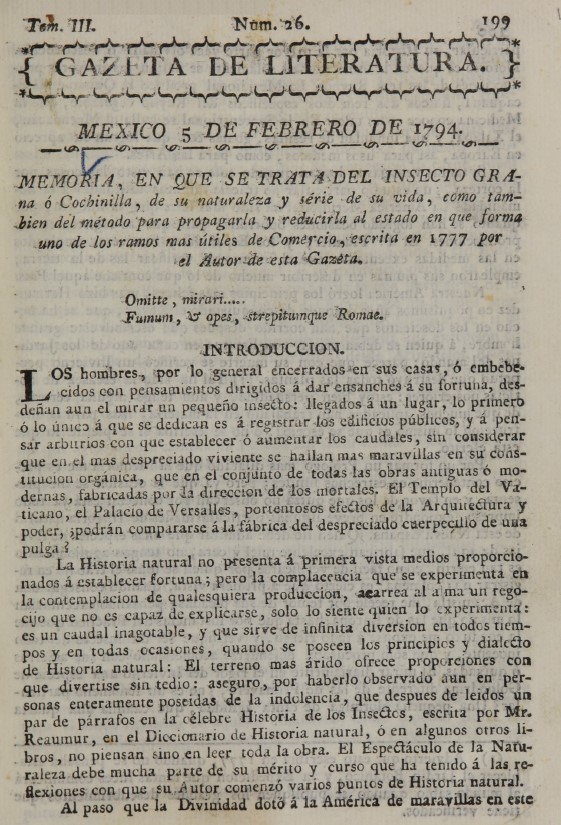
In the following centuries, cochineal became one of the main exports of the New World and its trade, monopolized by Spain for many years, contributed to making it one of the most powerful countries in Europe.
However, as with many other natural dyes, cochineal dye began losing its global relevance with the invention of cheap, mass-produced artificial dyes in the mid-19th century.
Recently, with a new interest on more sustainable and ecofriendly resources, the use of cochineal dye is booming again and becoming highly valued by textile artisans, not only because of the vibrant and durable reds that can be achieved but, more importantly, because cochineal dye is an environmentally friendly alternative to synthetic dyes.
In the present day, Canaturex has become a leading expert in the cultivation of cochineal, exporting their product all around the world. More importantly, Canatuex is, to my knowledge, the only natural dye in Europe with a quality certification by the European Union, ensuring a cultivation process sustainable and a resulting pigment of high quality.
Following here is a short interview with Lorenzo Pérez, the heart and soul of Canaturex.
What is Canaturex and how was it created?
Canaturex, the Secret of Cochineal, represents a professional agricultural company rooted in family tradition, specialized in the breeding and collection of cochineal on the idyllic island of Gran Canaria. Its beginning in 2009 marked a significant milestone by highlighting and preserving an agricultural sector that, at that time, faced the imminent threat of disappearance in the Canary archipelago.
This entrepreneurial project arose with the purpose of rescuing a historic crop deeply rooted in the culture of the Canary Islands, which will soon celebrate its bicentennial in these lands. As founder of the company, I represent the fourth generation of a family of harvesters. The creation of Canaturex was the result of observing and studying the alarming decrease in active cochineal harvesters, which was bringing the sector to the brink of extinction.
The fundamental objective of Canaturex is twofold: to revitalize the ancestral art of cochineal harvesting and to disseminate, worldwide, the traditional production techniques of dyeing raw materials, inherited from generation to generation since the 19th century. All of this, to reintroduce a valuable natural dye to the market, produced locally and in harmony with the environment, thus contributing to the preservation of a kilometre zero cultural and environmental heritage.
Can you tell us a bit about cochineal and how it is cultivated, collected, and processed?
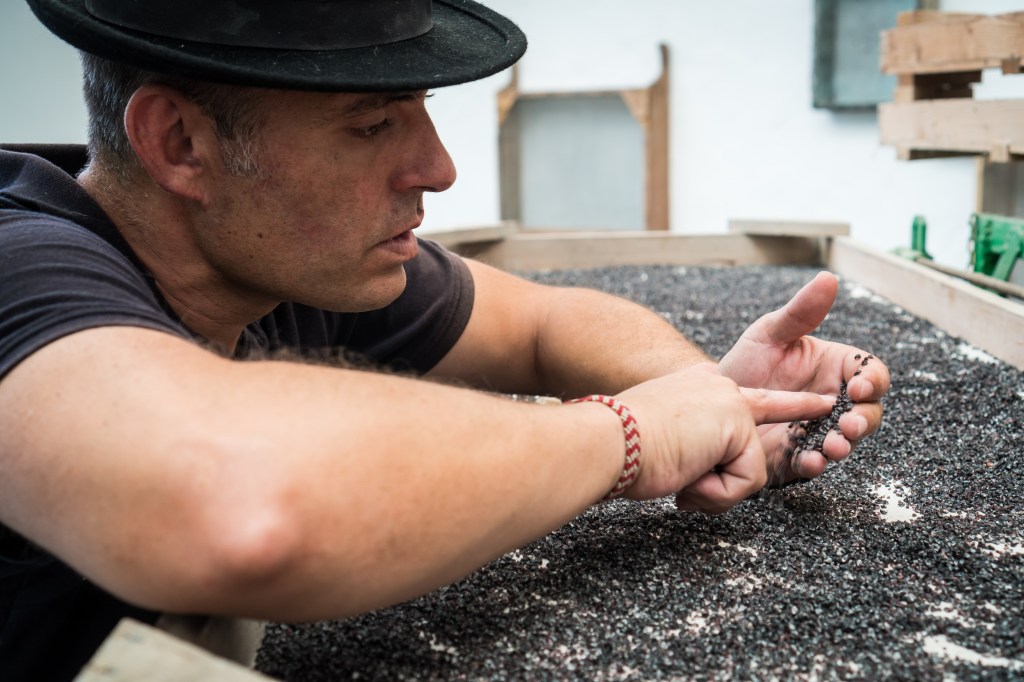
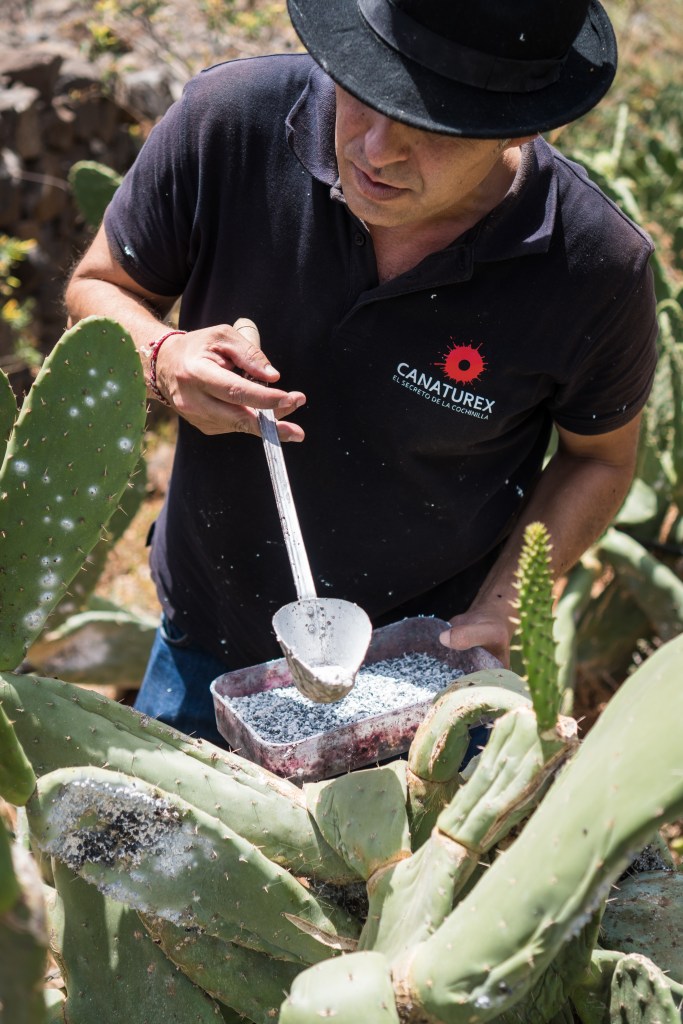
At Canaturex, we remain faithful to ancestral production techniques. We use a traditional tool called ‘milana’ to collect exclusively the adult cochineal mothers, and to deposit them in a tin container. Subsequently, we carry out a thorough cleaning process to eliminate any impurities accumulated during harvesting.
The cochineal is then dried though a natural process under the action of the sun. Once dehydrated, we subject the cochineal to a rigorous analysis in the Ministry’s laboratory, thus guaranteeing the optimal quality of the dye before it is packaged in cotton or jute bags.
Not only do we take care of the insect, but we also have to take care of the plants, pruning, watering, fertilizing and caring for the soil, something extremely important in agriculture. I love to share all these phases with my clients through social networks and thus make them participate in my work and in some way bring them closer to this crop and its production methods.
During the process of establishing Canaturex, we encountered several challenges, mainly of a bureaucratic nature. One of the most significant occurred during the registration of the trademark at the Patent and Trademark Office.
At that time, a multinational company with a stock market value of more than 200 million euros tried to oppose it, citing similarities in the name.
Although I lacked the resources to hire an attorney, I defended my trademark based on similar legal precedents, ultimately prevailing in this litigation.
This success strengthened my determination to continue working on obtaining quality seals, such as the Protected Designation of Origin, the ecological seal that is about to be approved and the logo of the outermost regions, processed before the European Union and the Government of Spain.
I did not have the support of the Canary Islands government technicians or the retired cochineal producers, which led me to personally prepare and process the necessary files. Recently, we have started the process to obtain declaration as a Novel Food by the European Food Safety Authority.
What are your core values and what makes Canaturex unique?
At Canaturex, our core values focus on transparency, sustainability through certified quality and close treatment with each client.
In the international cochineal market, we stand out for offering a product with unmatched hallmarks of differentiated quality.
My passion for cochineal drives our constant commitment to exceeding quality standards each year.
The concentration of carminic acid in the dry matter is a key quality indicator, and we have managed to exceed even the Protected Designation of Origin requirements of 19%, reaching 25% concentration last year, an exceptional achievement.
I consider it essential to care for and pamper these insects to obtain extraordinary results. For us, quality is essential to strengthen the value chain in the world of natural dyes, and each customer is an integral part of this mission.
Cocchineal dye from a Canary Islands is, at the moment, the only natural dye with a protected designation of origin (PDO) certificate from the European Union1.
On the other hand, quality certification by public organizations such as the European Union not only guarantees the quality and safety of agricultural and livestock products, but also implies compliance with criteria of environmental sustainability, animal welfare and social responsibility, thus contributing to a more sustainable and equitable production system.
What is Canaturex’s next goal?
We have forged a significant collaboration with the Royal Tapestry Factory of Spain, a textile institution with a rich 300-year history.
In November, we will commemorate the two centuries of history of cochineal cultivation in the Canary Islands at its headquarters, an event that promises to be historic.
I have managed to secure the participation of internationally renowned institutions, such as the “Prado Museum” and the “Museo del Traje” in Spain, the National Gallery in London, the Van Gogh Museum in the Netherlands and the Mobilier National in France. These entities will provide us with valuable information about works of art that use cochineal, exhibited in their respective galleries. All this information will be centralized in an application that will accompany the Bicentennial Traveling Exhibition.
Cochineal remains relevant thanks to those who use it, and that is why we want everyone to be able to participate in this historic celebration.
In this sense, I am developing a special book where all dyers from around the world can contribute a small piece of textile, watercolour or paper dyed with cochineal, of 4×4 cm in length and width. Each contribution will include the author’s information and a short phrase describing what inspired their sample2. This bicentennial book will be a unique piece that reflects the diversity and global reach of the cochineal community.
Nowadays, we are all more aware on the importance of working with natural materials, sourced through sustainable practices. This applies not only to working with wool and other natural fibres but also to the dyes we use. I hope this article contributes, even in a small way, to this new movement where ideas of sustainability, knowing were our materials come from and what impact they have on our surroundings are important in our daily textile techniques.
For those interested in learning more about the history of cochineal I would recommend “Cochineal Red. The Art history of a color” by Elena Phips.
1the POD certificate is a guarantee of quality trade. Products with a PDO certificate owe their quality to the geographical environment, including its natural and human factors, where they are produced, processed and prepared.
2You can send your sample to Canaturex. Lorenzo Pérez- C/San Esteban, 3. CP. 35018 Las Palmas de Gran Canaria. Spain.
 TeresaLaLana