
A new series of my articles describing a few of the autochtonous breeds of the Iberian Peninsula have been published by the Journal for Weavers, Spinners & Dyers.
One of my objectives is to suport local wool producers and, in my opinion, the Journal is one of the best plataforms to give voice to our amizing sheep breeds!
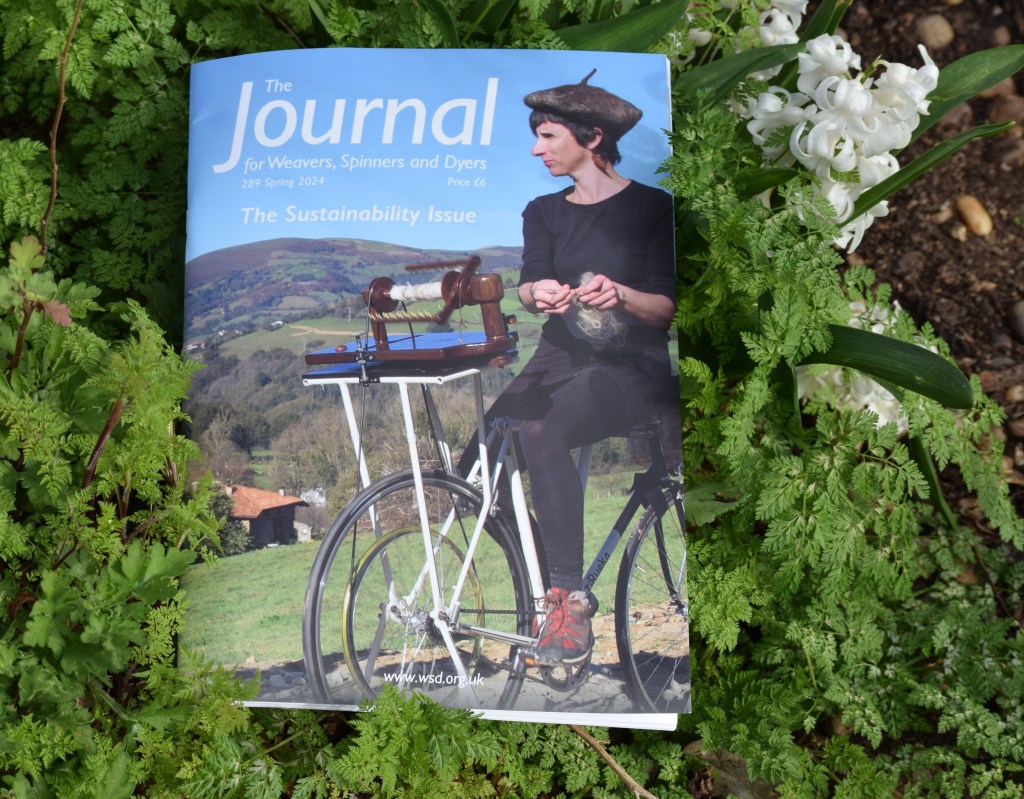
You can find a all the information regarding the Journal and the Association of Guilds of Weavers, Spinners and Dyers in my post Wovember on the JWSD.
In the first article I briefly describe the origins of Merinos, an internationally known breed whose wool inmmediately evokes the idea of delicate and soft yarns. I was very surprised to realized that many people had the wrong idea that Merino´s were originated from Australia….
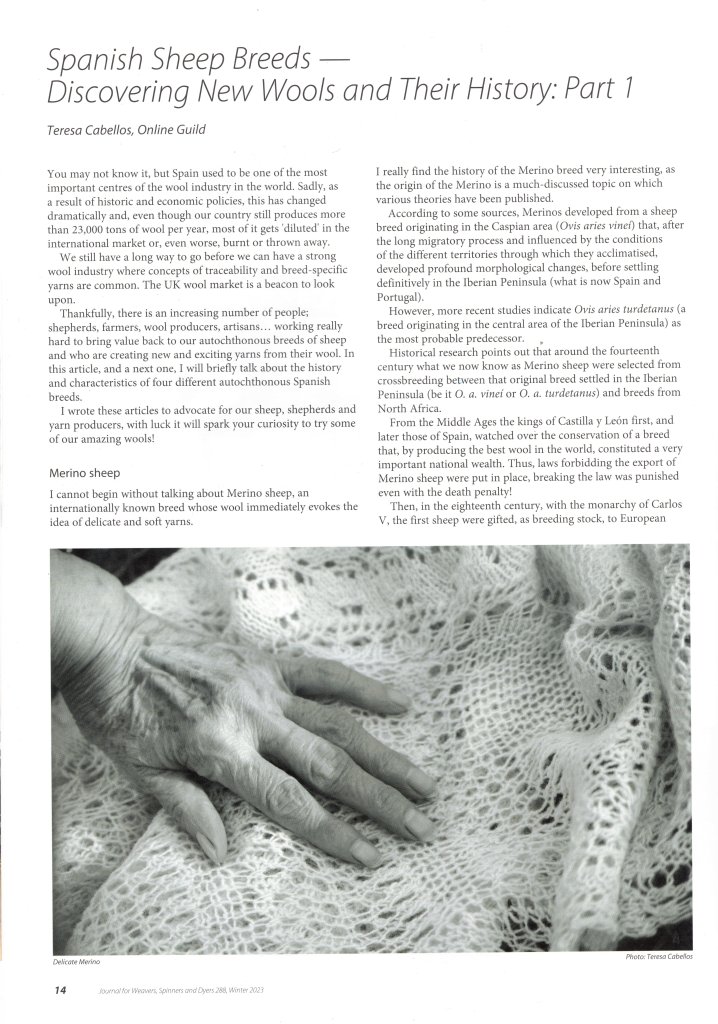
The second part of the article foccusses on a very ancient breed, the Xalda, a breed that Roman historians recorded as the sheep of the Astures. Nowadays, is thanks to the hard work of people like Marina Perez from @la.flor.cerval and Paz Mesa that the wool of Xalda sheep is finding a renewed interest for textile artisans.
The second article foccusses on two traditional breeds, the Ripollesa and the Carranzana.
- The preservation of local sheep breeds is fundamental for the development of local ecconomies, the safeguarding of traditional textile knowledge and the future of our rural communities.
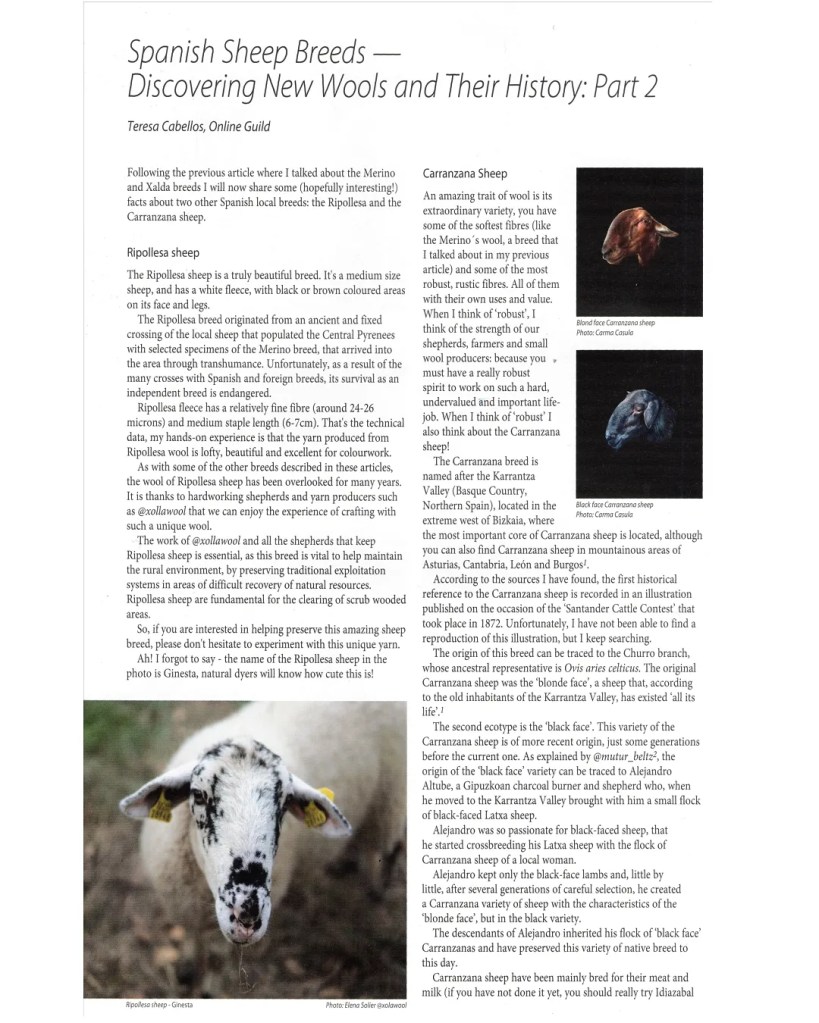
Ripollesa sheep was originated from an ancient and fixed crossing between the local sheep that populated the Central Pyrenees and selected specimens of the Merino breed, that arrived to the area through transhumance. Unfortunately, as a result to the many crosses with Spanish and foreign breeds, its survival as an independent breed is endangered.
The work of Elena and all the shepherds that keep Ripollesa sheep it is essential, as this breed is vital to help maintaining the rural environment, by preserving traditional exploitation systems in areas of difficult recovery of natural resources. Ripollesa sheep are fundamental for clearing of scrub wooded areas.
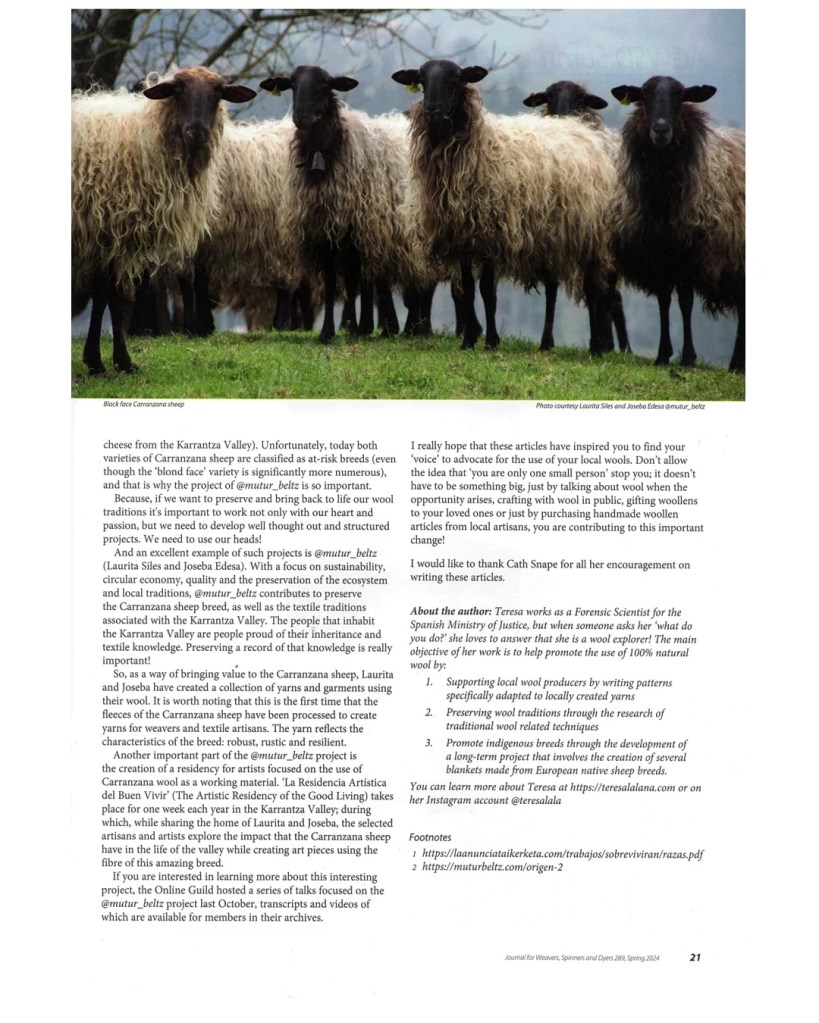
The Carranzana breed is named after the Karrantza Valley, located in the extreme west of Bizkaia, where the most important core of carranzana sheep is located, although you can also find carranzana sheep in mountainous areas of Asturias, Cantabria, León and Burgos. The wool of the Carranzana sheep is robust and with a lot of character.
As with most of our breeds, the wool of the Carranzana sheep is mostly discarded as waste product. So, as a way of bringing value to the Carranzana sheep, Laurita and Joseba have created a collection of yarns and garments using their wool. It is worth noting that this is the first time that the fleeces of the carranzana sheep have been processed to create yarns for weavers and textile artisans. The yarn created reflects the characteristics of the breed: robust, rustic and resilient.
 TeresaLaLana