
There is archaeological evidence that human ingenuity invented a new tool, the spindle, to simplify and accelerate the process of twisting threads by hand, no later than from the beginning of the Neolithic period (in Central Europe from c. 5,600 BC).
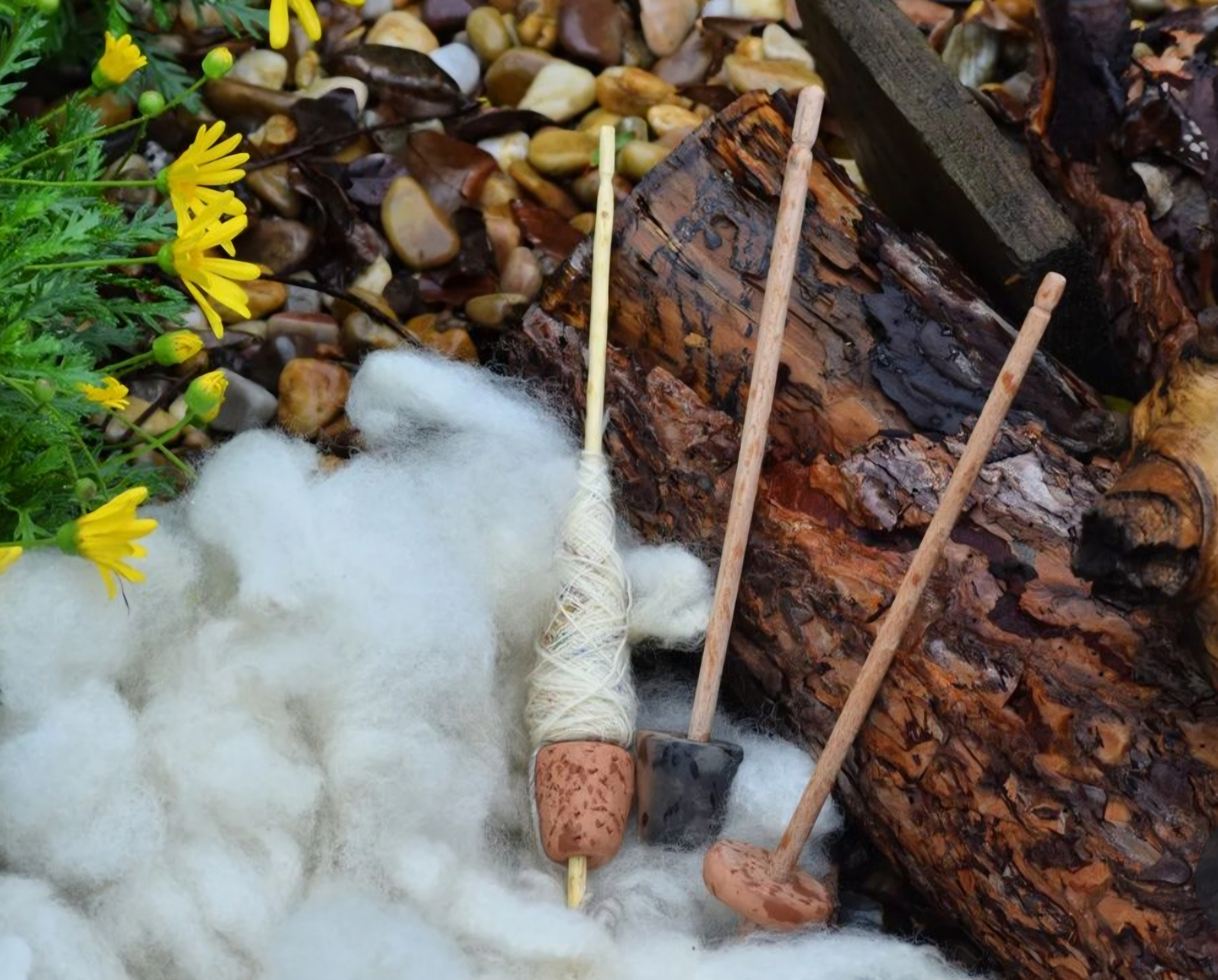
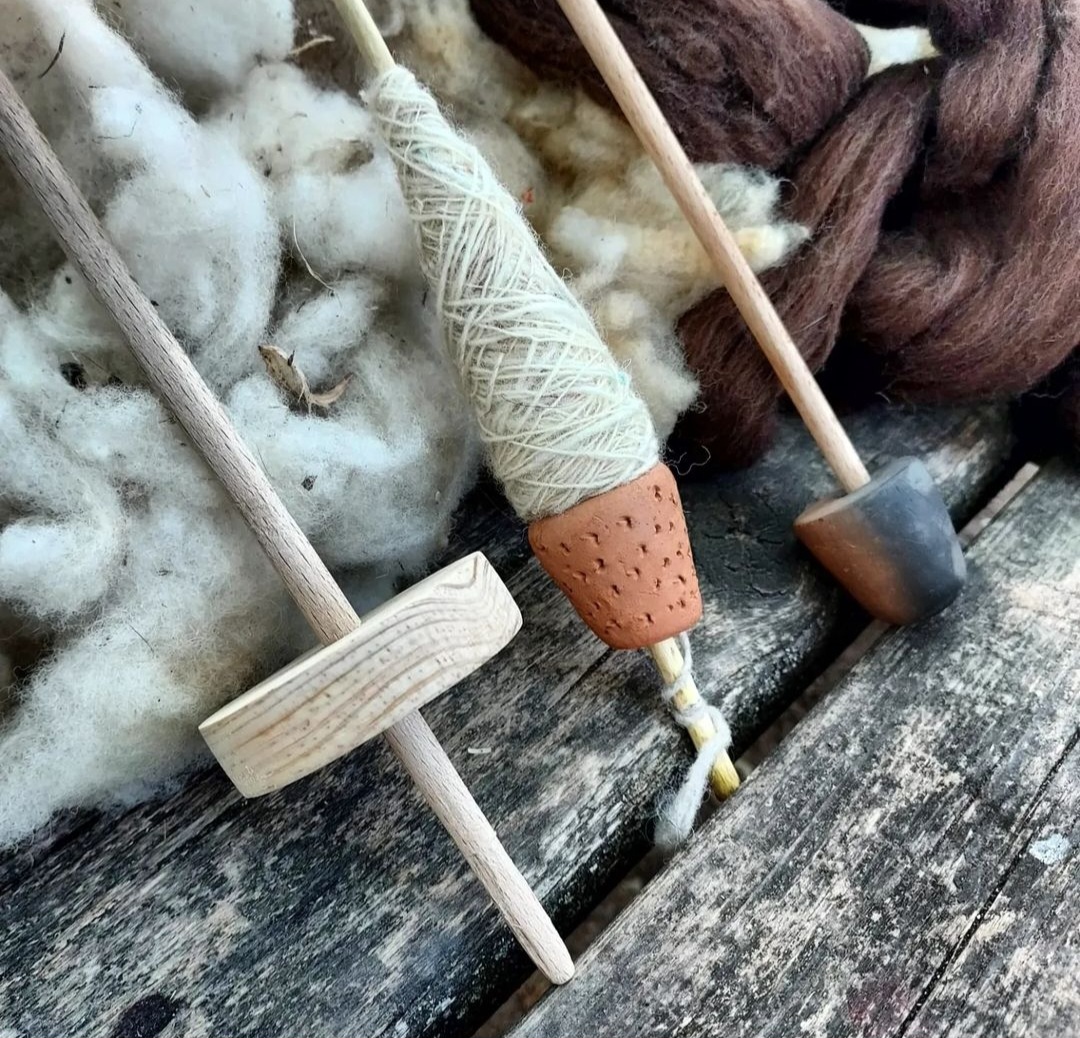
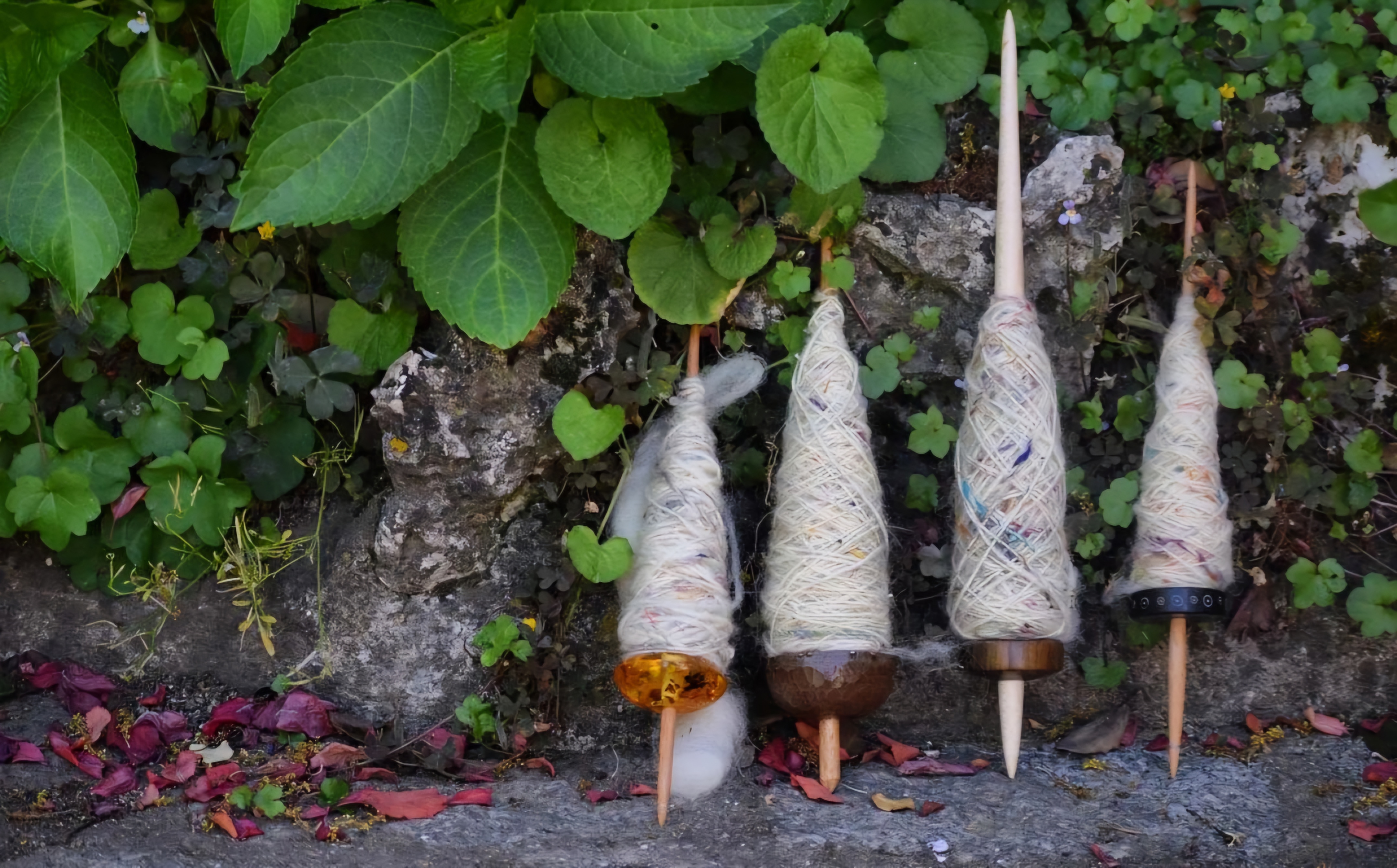
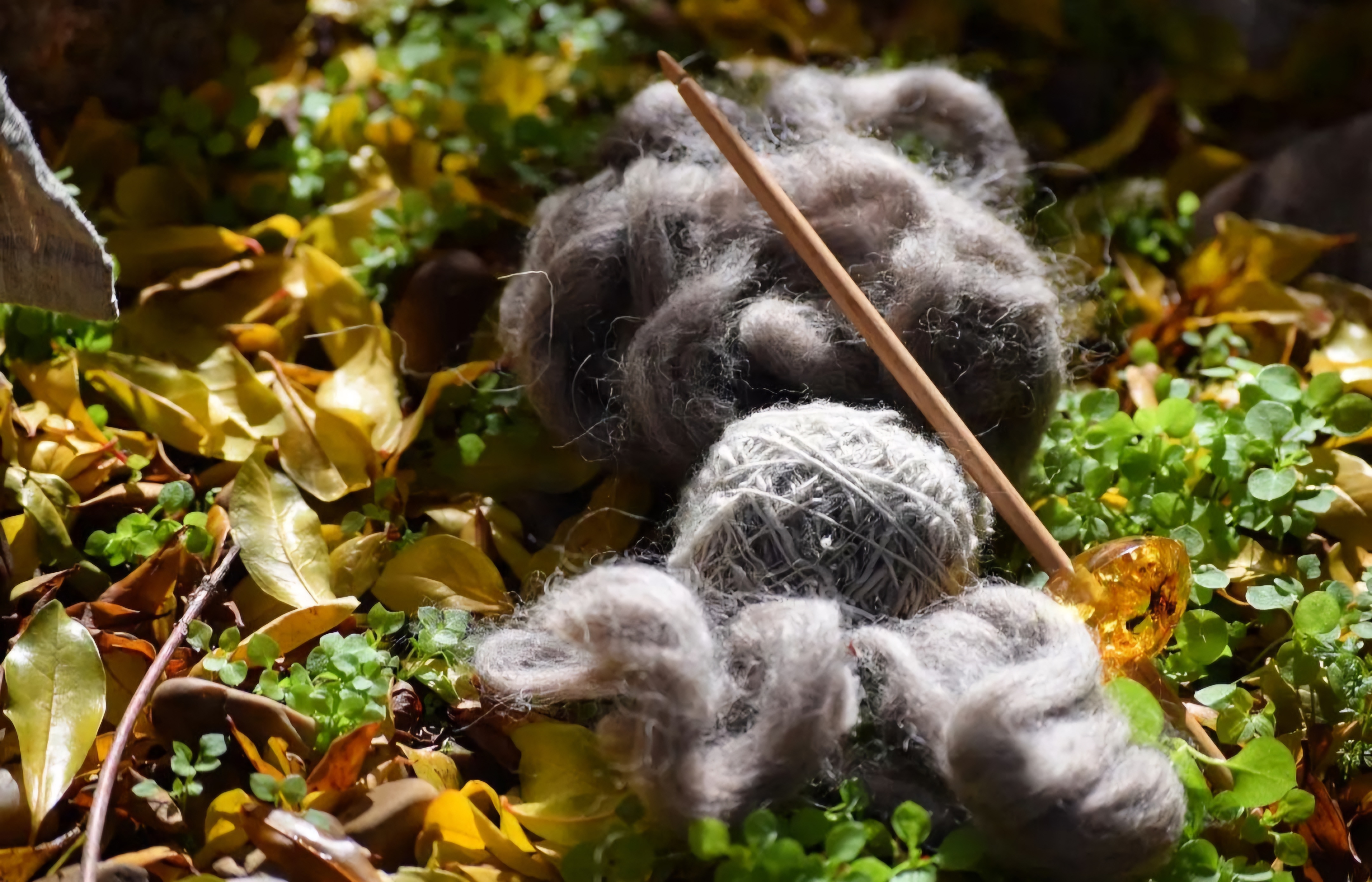
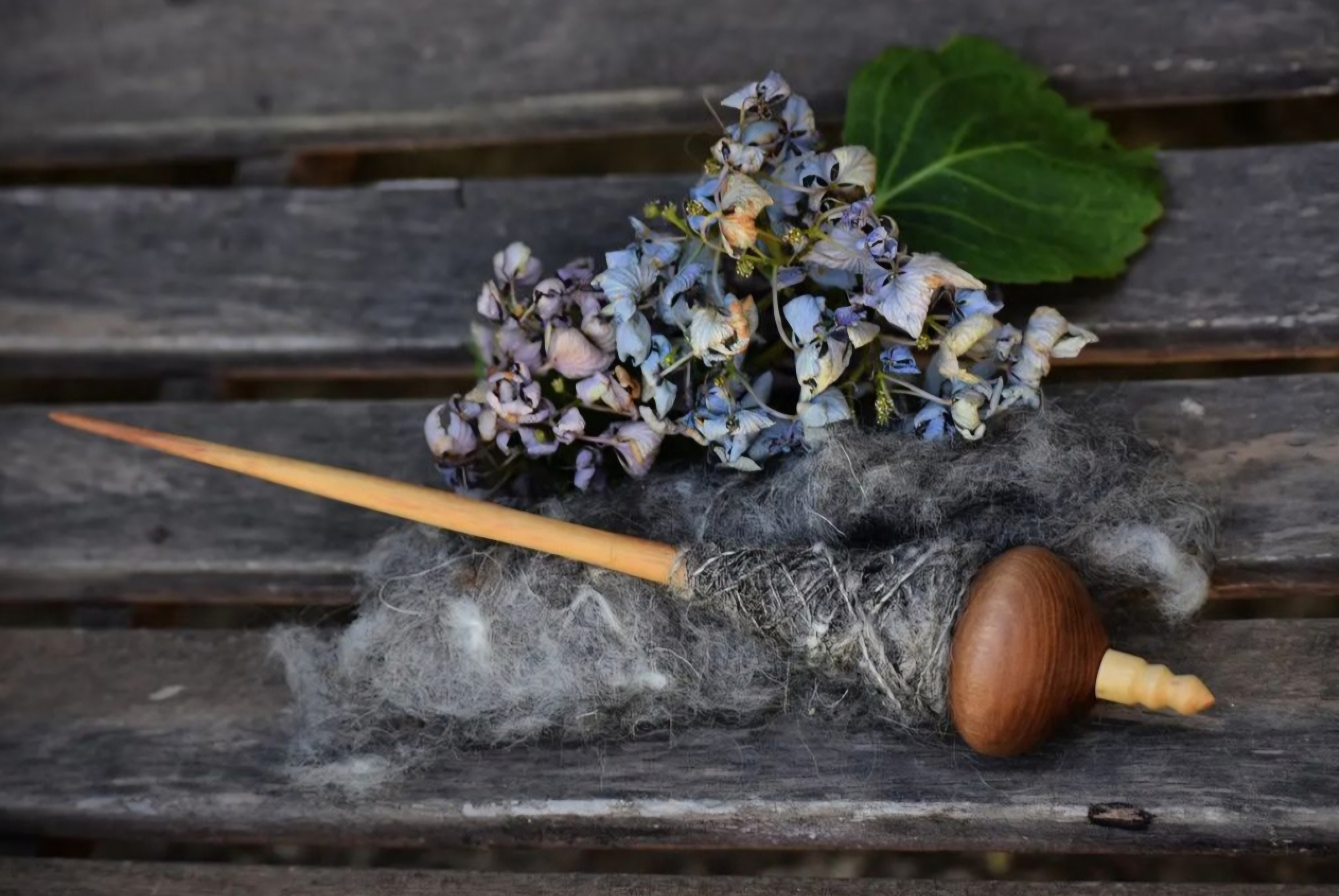
What is a spindle? Although there may be some variations, a spindle basically consists of a wooden rod (the shaft) with a weight (known as the whorl) placed either on the upper or lower thirds. The weight of the spindle whorl facilitates the process of spinning yarn by drawing the thread in a rapid and uniform rotation

Types of spindles:
In the world of spindles there are basically two types of spindles & within those types we can find several subtypes. The basic types are suspended spindles & supported spindles.
- Suspended spindles (or drop spindles):
Suspended spindles are so called because the process of spinning is done with the spindle hanging from the thread of yarn that is being spun. It is not rare that while spinning, the thread breaks (especially when you are learning to spin) & thus the name “drop spindle”. Spinning with the drop-spindle be done whilst sitting, standing, and – with enough expertise – even while walking.
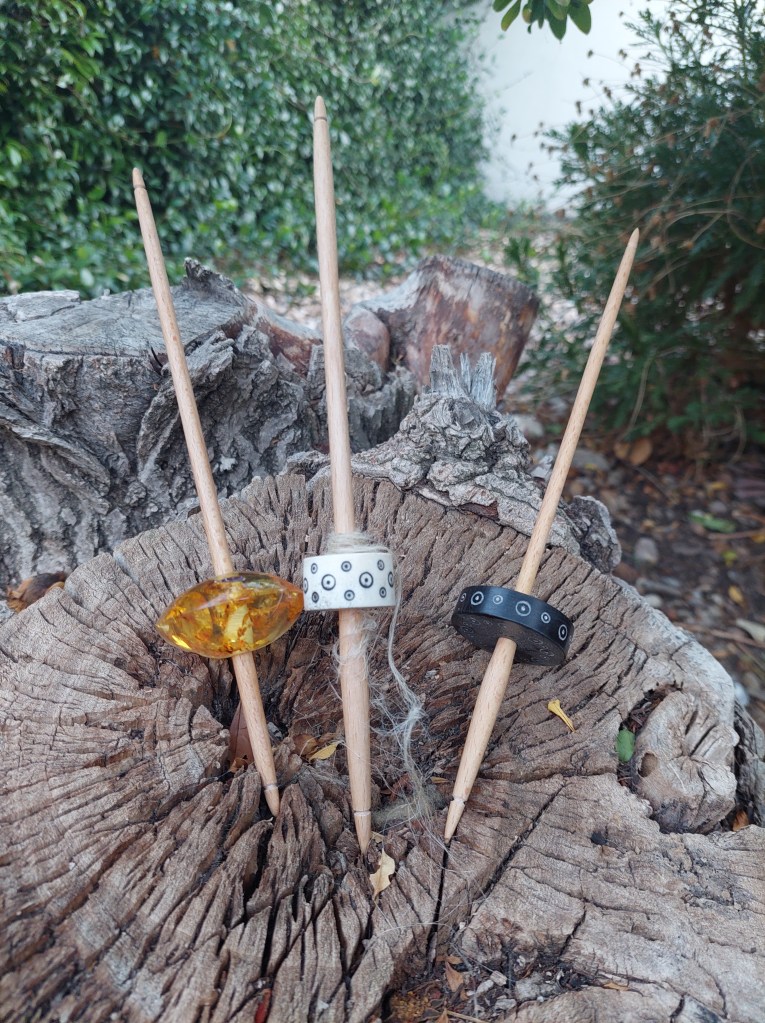
Although the basic anatomy of a drop spindle is very similar (a shaft, usually made of wood or metal & the whorl that gives weight to the spindle & can be made of many different materials, wood, bone, glass, metal, clay, stones, even amber…), there are many different subtypes of drop spindles. The form & where the whorl is placed on the shaft is what differentiate the different subtypes of drop spindles.
So, we have top-whorl spindles, where the whorl is placed on the top of the shaft. Most top-whorl spindles have a hook on the tip of the shaft, from where you can attach your spun yarn. My first spindle was a top whorl spindle.
Twist!
Adding twist to the fibre (whether animal or general fibre) is what transforms the material used into a strong, continuous thread, that can be used to create fabric (through different techniques like weaving, knitting, crocheting, nålbinding, … )
Before the spinning wheel was invented (and its origin is not known, different sources situate the development of the spinning wheel sometime between 500 & 1000 A.D. in Egypt, India or China), all the twist was added using spindles.
Think about that, before that time, all the fabric used for creating the clothes, sails, blankets, everything! was spun using spindles!
I once read that the wool of at least 400 sheep were required to provide enough wool to fully equip one typical Viking vessel, with all the textiles needed for their journey, including clothes, blankets, sails! & by these estimates, nearly 2,000,000 sheep needed to be rooed to provide enough wool for the entire Viking fleet.
I find that mind blowing…
So, talking about twist, the first thing I learned when I started to spin my own yarn was that twist can be added in two different ways, “Z” & “S” twist, which just indicates the direction of the wheel or spinning while spinning.
“Z” twist indicates that the wheel or spindle rotates clockwise, while “S” twist indicates an anticlockwise rotation.
Once you have spun your singles (your strands of yarn), you can ply them together (that means that you can spun together two or as many strands as you want).
The important thing is that all the singles are spun in the same direction (adding “Z” or “S” twist) & then plied on the opposite direction.
I usually spin my singles with a “Z” twist & ply them with “S” twist, but I guess you can do it the other way round, everything should be fine as long as you are consistent…
On the other hand, bottom-whorl spindles are spindles where the whorl is placed on the lower area of the shaft. The shaft may have a hook or a notch at the top to facilitate attaching the spun yarn. Bottom-whorl spindles are very interesting, because there are many different regional variations on the shape of the whorl.
The most common type are the rounded bottom-whorl spindles, I am not sure about this, but I believe that this type of spindles were probably some of the oldest spindles to have been used.
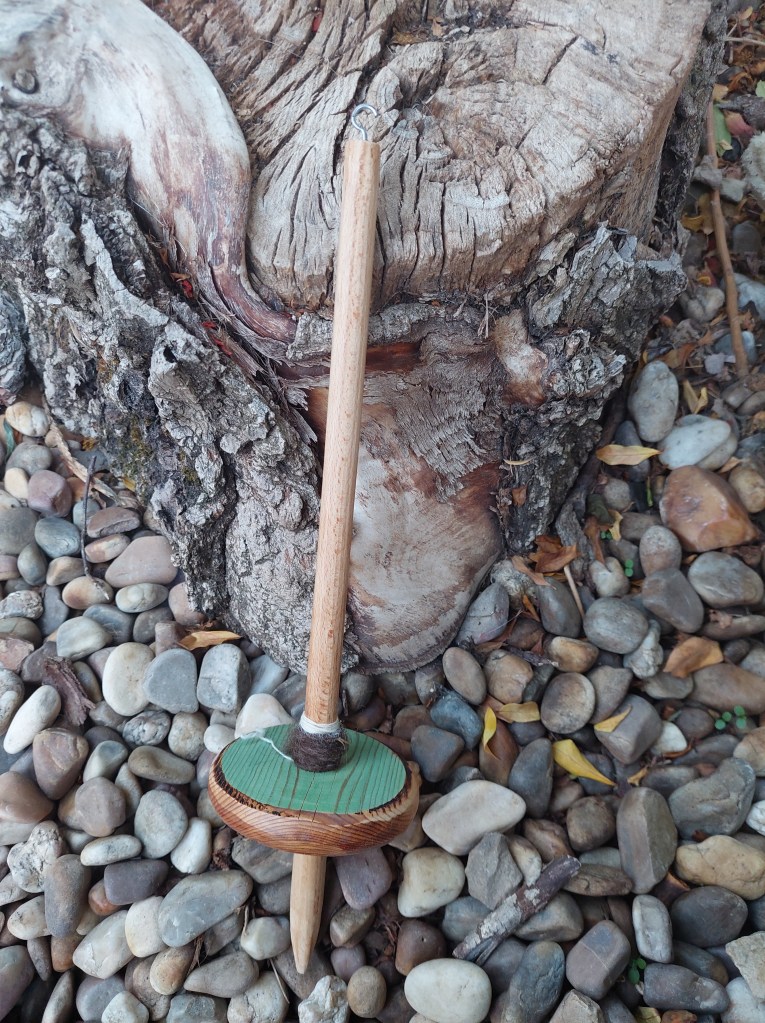
One cool thing with rounded drop spindles is that you can add a notch to both sides of the shaft making it both top- & bottom whorl spindles!
Another type of bottom-whorl spindles are the Turkish spindles, which are one of my favorite types of spindles. I love their design, how they spin & the fact that, when you finish spinning, the yarn is arranged in a very nice & neat ball. What makes the Turkish spindles so interesting is its construction. The whorl consists of two wooden pieces (usually with a more or less evident curvature), of which one of them can be inserted inside the other, forming a cross (or X shape) that is then slid onto the shaft. Because of this construction, once you finish spinning, the whorl can be removed with the yarn still wound around it & then the whorl arms can be dismounted, sliding them out of the yarn ball and… voila’! … you can knit right from this ball.

Finally, another one of my favourite bottom-whorl spindles is the Txoatile.
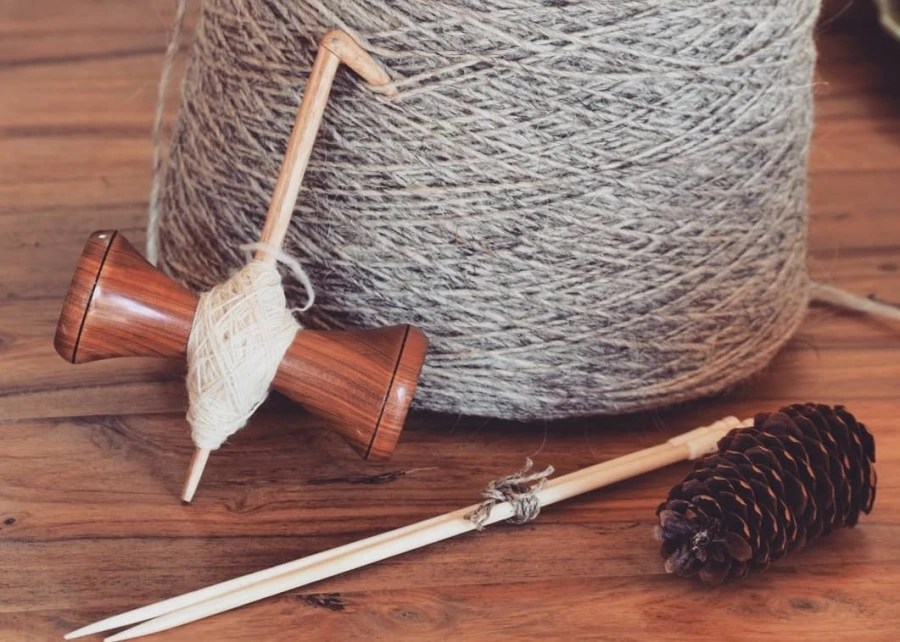
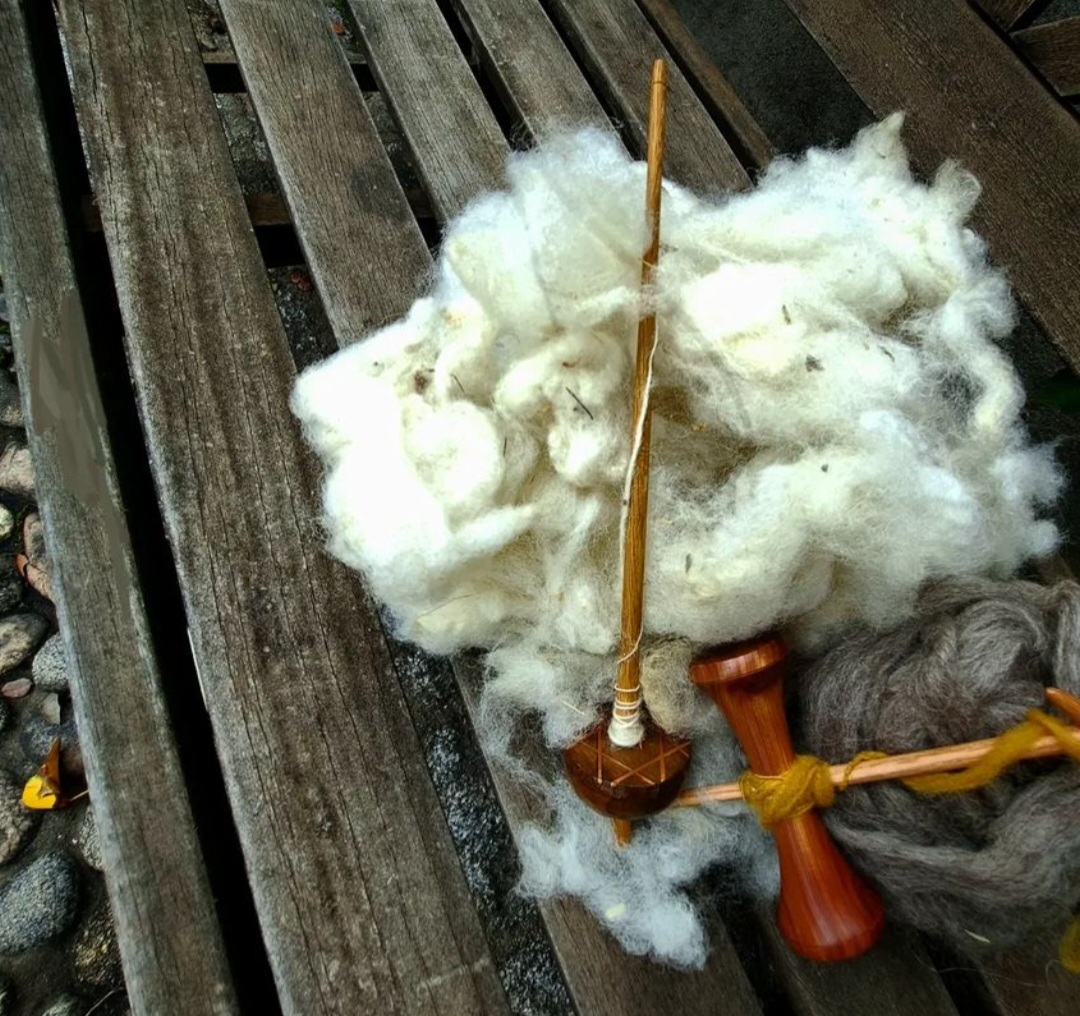
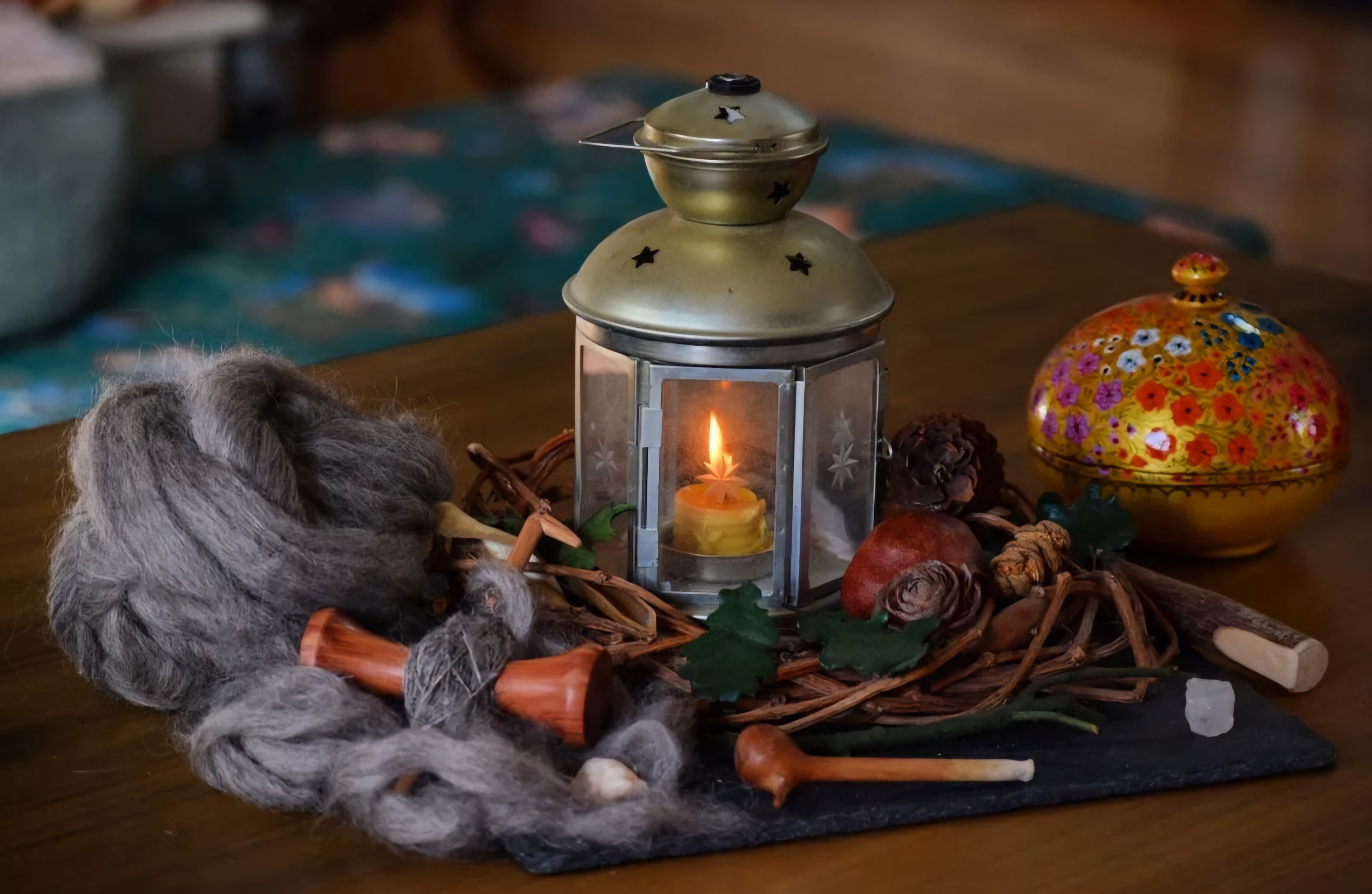
This is an ancestral type of spindles, which origins can be traced to the Basque region, dating from the neolithic. Txoatiles are basically single cross-arm spindles, with a very simple, yet incredibly beautiful construction, one shaft that runs through a diabolo shaped whorl. The name “txoatile” comes from the basque words “txori” (meaning bird) & “artilea” (meaning wool) & really reflect the way the txoatile spindle spins… like a dancing bird!
- Supported spindles:
Supported spindles are, commonly used allowing it to run in a ceramic bowl or on the floor so that gravity does not act on it. This technique is documented worldwide (there is evidence of its use for some North American Indian tribes, in North Africa, India, Tibet, Russia…). However, for some supported spindles (like French spindles, which don’t have a whorl, but the shaft is shaped with a thick body that facilitates the twirling movement), instead of always resting on a surface, when spinning one hand is constantly touching or almost touching the spindle.
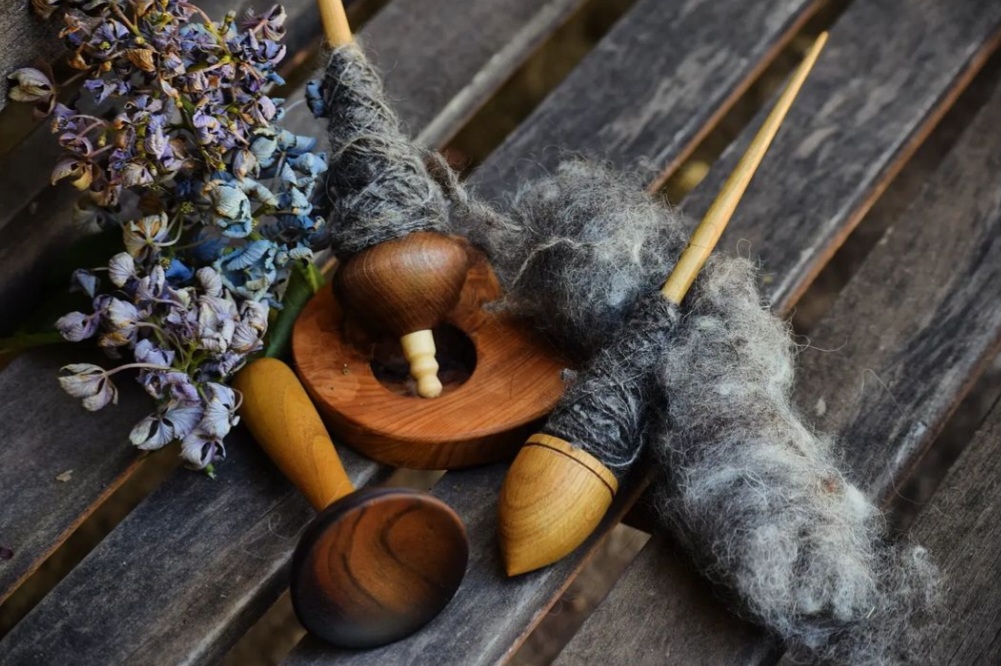
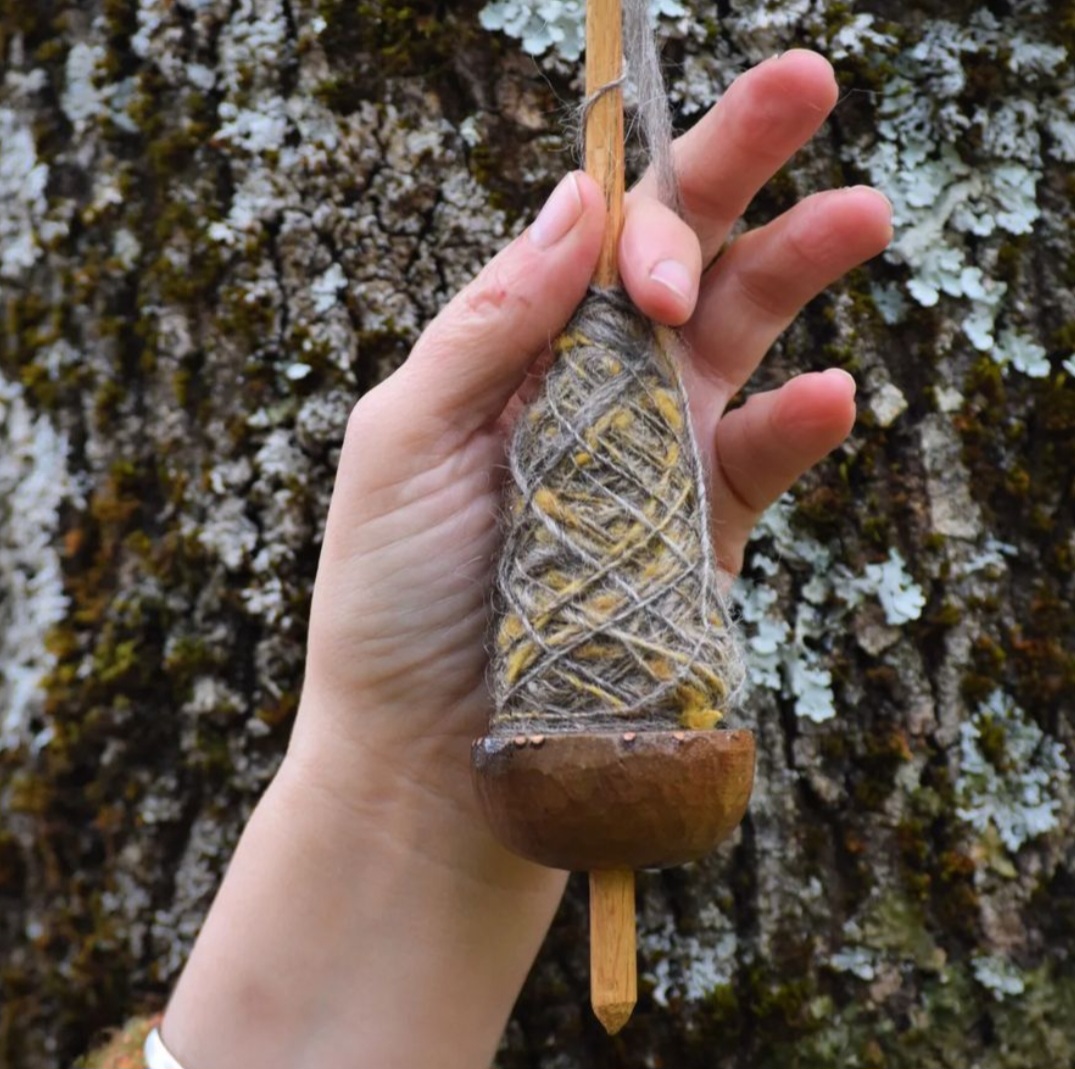
Tibetan spindles are traditionally used to spin yak, goat, and sheep fibres & are characterized by their balanced & prolonged spin. I find Tibetan spindles very beautiful, with its Tulip or ‘Tibetan bell’ shape whorl! However, I must admit that for the moment I still find quite difficult to use my Tibetan spindle…
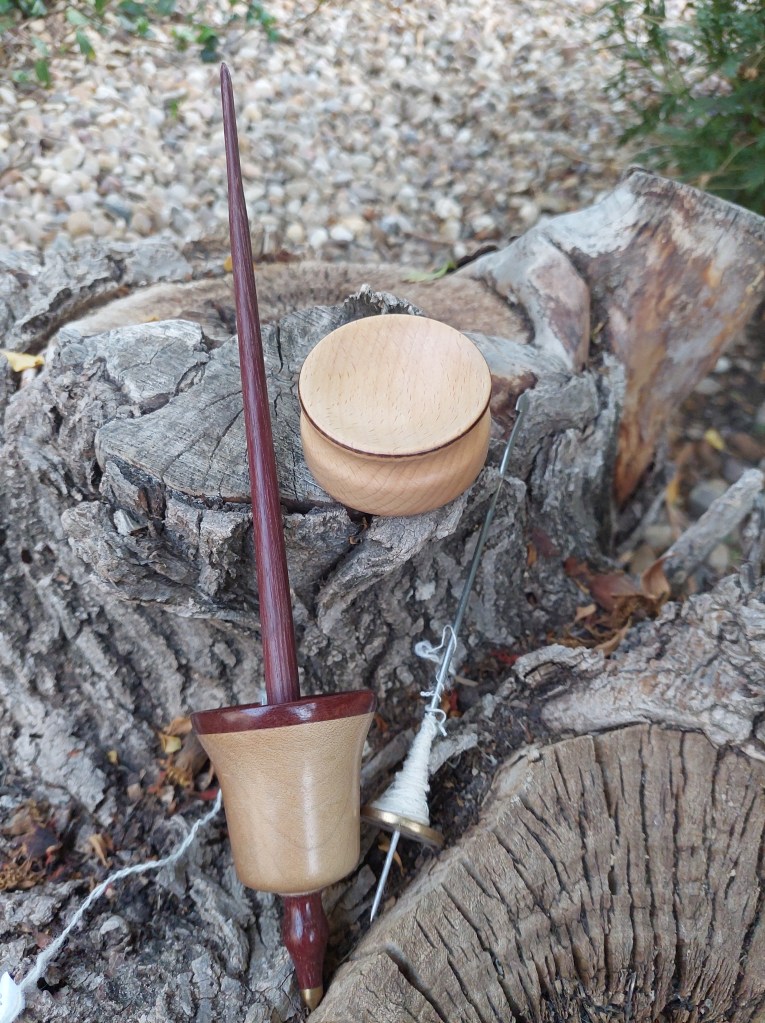
A completely experience is spinning with a Tahkli, a supported spindle originated from India, that spins very fast & is perfect for spinning short-staple fibres like cotton. The most common thakli spindles are made of metal, both the shaft & the whorl (some even made with coins!). The whorl is very light-weighted & has a small circumference, which is what makes the spindle so fast!
Two supported spindles that I have not try…
Russian spindles are usually very light-weighted and have a very fast & short spin time, needing more flicking to maintain speed. I have never used a Russian spindle (yet!) but for what I have read, contrary to Tibetan spindles, Russian spindles become easier to use as they fill with the spun yarn.
The Navajo spindle is used by the Navajo and Pueblo Indian nations. While spinning with this incredible spindle, the spinner sits on the floor or in a chair, with the top part of the shaft resting on the thigh of the spinner & the bottom part of the shaft resting on the ground, the spindle is then rolled up the thigh with the spinning hand creating a twirling movement, while the fibre hand controls the fibre.
There is a beautiful video of Navajo weaver Clara Sherman spinning with a Navajo spindle.
•
I will just end by saying that adding twist to fibres is a mesmerising & comforting process, it brings calm to my thoughts & helps me find a place where I am just alone in a quiet & safe space.
 TeresaLaLana